
What Are DAOs and How Do They Work?
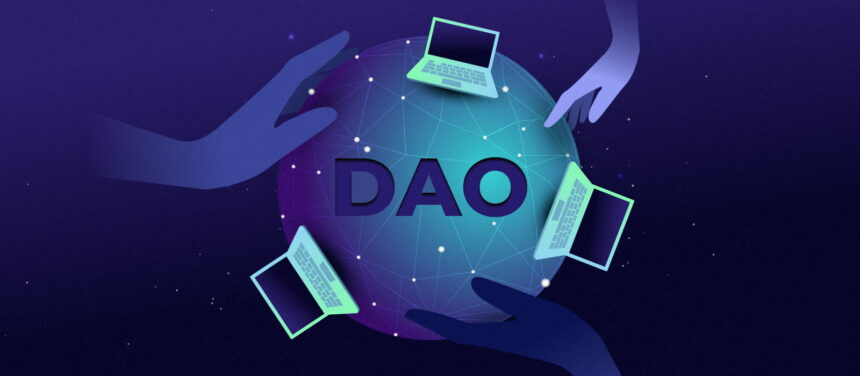
Decentralized autonomous organizations (DAOs) are blockchain-based organizations that use shared governance rules, community participation, and often smart contracts to coordinate decisions without relying entirely on a central authority. They can manage digital assets, fund open-source projects, govern decentralized finance (DeFi) protocols, support creators, and coordinate communities across geographical boundaries.
- What Is a DAO?
- How Do DAOs Work?
- 1. Establishing the DAO’s Purpose and Governance Rules
- 2. Deploying Smart Contracts
- 3. Distributing Membership and Voting Rights
- 4. Submitting and Discussing Proposals
- 5. Voting on Proposals
- 6. Executing Approved Decisions
- An Example of DAO Governance in Practice
- What Are the Main Types of DAOs?
- 1. Protocol DAOs
- 2. Investment DAOs
- 3. Grant DAOs
- 4. Social DAOs
- 5. Collector and NFT DAOs
- 6. Service and Worker DAOs
- 7. Philanthropic and Public-Goods DAOs
- What Are Governance Tokens, and Why Do They Matter?
- On-Chain vs. Off-Chain DAO Governance
- Benefits of Decentralized Autonomous Organizations
- Greater Transparency
- Global Participation
- Shared Decision-Making
- Programmable Treasury Management
- Open Collaboration and Innovation
- Risks and Limitations of DAOs
- Smart Contract Vulnerabilities
- Low Voter Participation
- Concentration of Voting Power
- Governance Attacks and Manipulation
- Legal and Regulatory Uncertainty
- Treasury and Market Risks
- DAO vs. Traditional Organization: Key Differences
- How to Join a DAO
- How to Create a DAO
- Define the Mission and Membership Model
- Choose a Governance Framework
- Design Voting and Proposal Rules
- Secure the Treasury
- Review Legal and Tax Requirements
- The Future of DAOs in Web3
- Authoritativeness and SEO Recommendations
- Conclusion
- Frequently Asked Questions About DAOs
- 1. What does DAO stand for in cryptocurrency?
- 2. How does a DAO make decisions?
- 3. Do all DAOs use governance tokens?
- 4. Can you make money from a DAO?
- 5. Are DAOs legal?
- 6. What is the difference between a DAO and a smart contract?
- 7. What are the biggest risks of DAOs?
- 8. What is the difference between on-chain and off-chain governance?
- 9. What is a DAO treasury?
- 10. How do I evaluate whether a DAO is trustworthy?
- 11. Can a DAO be hacked?
- 12. Are DAOs the same as decentralized finance (DeFi)?
Unlike a conventional company, where executives and directors typically have defined decision-making authority, a DAO can allow members to submit proposals, vote on changes, and influence how a shared treasury is used. Depending on its design, some decisions are executed automatically through smart contracts, while others require people to carry out approved actions.
DAOs are an important part of the Web3 ecosystem because they combine blockchain transparency with collective decision-making. However, decentralization does not automatically guarantee fairness, security, or effective governance. Voting power may be concentrated among a small number of token holders, smart contracts can contain vulnerabilities, and legal responsibilities may remain even when an organization operates through blockchain technology.
This guide explains what a DAO is, how decentralized governance works, the different types of DAOs, their benefits and limitations, and how individuals can evaluate or participate in a DAO.
What Is a DAO?
A decentralized autonomous organization is a group organized around a shared purpose that uses digital governance mechanisms, often supported by blockchain technology, to coordinate decisions and manage resources.
The term has three components:
- Decentralized: Decision-making authority is distributed among participants rather than assigned exclusively to a single central administrator. The actual degree of decentralization varies by organization.
- Autonomous: Rules and certain operations can be enforced automatically through smart contracts, reducing the need for manual intervention in predefined processes.
- Organization: Members coordinate activities, contribute resources, establish priorities, and work toward a common objective.
A DAO may use governance tokens, membership shares, reputation scores, delegated voting, or other participation systems. Members can vote on proposals involving protocol upgrades, community grants, treasury allocations, membership policies, and operational changes.
For example, imagine a community that wants to fund open-source software development. Members contribute funds to a shared treasury, submit proposals requesting grants, discuss the merits of each application, and vote according to the organization’s governance rules. If a proposal passes, a smart contract may release the approved funds automatically, or designated signers may execute the transaction.
The key difference is that governance rules and financial activity can be recorded and verified on a blockchain rather than depending solely on private records maintained by one administrator.
Ethereum.org describes DAOs as collectively owned organizations working toward a shared mission, with proposals, voting, and treasury management among their core functions. However, not every DAO is equally decentralized, fully autonomous, or collectively owned in a legal sense. The precise structure depends on its code, governance policies, membership arrangements, and legal framework. Source: Ethereum.org’s guide to DAOs.
How Do DAOs Work?
DAOs combine governance rules, participant coordination, blockchain infrastructure, and treasury management. The specific process differs across projects, but most follow a recognizable pattern: establish rules, invite participation, discuss proposals, vote, and implement approved decisions.
1. Establishing the DAO’s Purpose and Governance Rules
The first step is defining what the organization exists to accomplish and how decisions will be made.
A DAO focused on a DeFi protocol may govern software upgrades, risk parameters, and treasury spending. A grant-making DAO may select projects to fund. A creator community may allocate resources to events, content production, or collaborative projects.
The governance framework should explain who can participate, how proposals are submitted, what voting method applies, how much support is required for approval, and who can execute the result.
Rules may be encoded in smart contracts, documented in governance policies, or split between on-chain and off-chain processes. A blockchain contract can enforce certain requirements, but it cannot automatically resolve every human disagreement or legal question.
2. Deploying Smart Contracts
Smart contracts are programs deployed on a blockchain that execute predefined instructions when specified conditions are met.
In a DAO, smart contracts may manage governance votes, enforce voting periods, record results, control treasury transactions, and schedule approved actions. Some DAOs use established governance frameworks instead of developing every component from scratch.
For example, a treasury contract may be configured to transfer a specified amount of cryptocurrency only after a proposal passes the required voting threshold. If the governance contract verifies the required conditions, the transaction can be executed according to its programmed rules.
However, automation has limits. A smart contract generally cannot independently determine whether a proposal is wise, whether a real-world service was delivered properly, or whether a legal obligation has been satisfied. Those decisions may require human review, external data, or additional governance procedures.
Smart contracts also need careful security testing. An error in code can create consequences that are difficult or expensive to reverse once a transaction has been executed.
3. Distributing Membership and Voting Rights
A DAO must determine who has the right to participate in governance and how much influence each participant receives.
Some organizations allow anyone to join a public discussion forum, while formal voting may require holding a governance token. Others use membership shares, reputation-based systems, contributor credentials, or delegated representatives.
The membership model affects the organization’s power structure. If voting rights depend entirely on token ownership, a wealthy participant may acquire substantial influence by purchasing more tokens. If voting depends on reputation or contribution, the DAO must establish how reputation is earned and how decisions about membership are reviewed.
There is no universally best governance model. Token-based voting can be straightforward to administer, while reputation-based systems may reward sustained contributions. Both can create fairness challenges if their rules are poorly designed.
4. Submitting and Discussing Proposals
Members typically use a proposal process to request a decision or change.
A proposal might seek funding for a developer, change a protocol parameter, approve a marketing budget, elect a working group, or introduce a new governance rule.
Before a formal vote, participants may discuss the idea in community forums, messaging channels, governance platforms, or public calls. This discussion is important because a successful vote depends on understanding the proposal’s potential benefits, costs, and risks.
A strong proposal normally explains the problem, proposed solution, expected budget, implementation plan, responsible contributors, potential conflicts of interest, and measurable success criteria.
Some DAOs also require a proposal to meet a minimum threshold before it can proceed to a binding vote. This helps prevent spam but can make participation harder for smaller contributors.
5. Voting on Proposals
Once a proposal reaches the formal voting stage, eligible members cast their votes according to the DAO’s governance rules.
Voting may take place directly on the blockchain or through an off-chain platform that records votes and relies on a separate process for implementing approved decisions. Different systems use different combinations of voting power, quorum requirements, approval thresholds, and voting periods.
A quorum is the minimum level of participation or voting power required for a decision to be valid. A proposal may fail even if most votes cast support it when the required quorum is not reached.
Delegation is another common mechanism. A token holder can assign voting power to a representative who is willing to study proposals and vote on their behalf. Delegation can help improve participation, but it may also concentrate influence in the hands of a small number of delegates.
6. Executing Approved Decisions
The final step is implementation.
In an on-chain DAO, an approved proposal may trigger a smart contract to transfer funds, update supported protocol settings, or execute another predefined action. Some systems include a timelock, which introduces a delay between approval and execution. This gives participants an opportunity to inspect the change and respond to unexpected risks.
Other DAOs rely on multisignature wallets, in which several authorized signers must approve a transaction. In this model, a governance vote may authorize the action, but human signers still carry out the transaction.
The distinction matters: a DAO can use blockchain voting without automating every operational task. The degree of automation depends on the governance design and the nature of the decision.
An Example of DAO Governance in Practice
Consider a hypothetical DAO that manages a treasury worth $500,000 in digital assets and wants to fund open-source software projects.
The community receives three proposals: $20,000 for a security audit, $35,000 for developer grants, and $15,000 for educational resources.
Members review the proposals, ask questions, and discuss the expected outcomes. The DAO then holds a vote according to its established rules. Suppose the security audit proposal passes and the grant proposal also receives sufficient support.
Depending on the treasury’s design, the approved funds may be transferred automatically, released through a multisignature wallet, or distributed in stages after milestones are verified.
The DAO should also track whether the funded work is completed, whether the budget remains appropriate, and whether the grants deliver measurable value.
This example illustrates an important principle: decentralized governance is not simply voting on the internet. It is a complete process involving accountability, financial controls, implementation, and review.
What Are the Main Types of DAOs?
DAOs can be classified by their purpose, membership structure, and governance model. Some organizations combine multiple categories.
1. Protocol DAOs
Protocol DAOs govern decentralized applications and blockchain-based financial protocols. Members may vote on software upgrades, treasury allocations, collateral requirements, incentive programs, and other protocol parameters.
For example, a decentralized lending protocol may use governance to change risk settings or allocate resources to security improvements. Such decisions can directly affect users and the protocol’s financial exposure, making technical expertise and risk analysis especially important.
Protocol DAOs often use governance tokens, delegation, public proposals, and formal voting periods.
2. Investment DAOs
Investment DAOs coordinate members who want to evaluate opportunities and pool resources under a shared governance framework.
Members may discuss investments, approve allocations, and monitor portfolio performance. Depending on the structure, voting rights may relate to membership shares, contributed capital, or another participation model.
These organizations can face substantial legal and financial complexity. Pooling capital, managing investments, distributing profits, or selling investment-related tokens may trigger securities, tax, fund-management, or other regulatory requirements. A DAO’s decentralized structure does not automatically exempt it from applicable laws.
3. Grant DAOs
Grant DAOs allocate resources to projects that support a defined mission. Common areas include open-source software, blockchain infrastructure, research, education, and community development.
Members may review applications, assess project milestones, and vote on funding decisions. Some grant organizations use specialist committees or delegated reviewers to reduce the burden on token holders.
Clear evaluation criteria are important. Without them, grant decisions may favor well-connected contributors rather than projects with the greatest potential benefit.
4. Social DAOs
Social DAOs organize communities around shared interests, professional networks, events, or collaborative activities.
Participation may involve membership tokens, contributions, invitations, or community-defined criteria. The treasury may support events, shared resources, content creation, or other collective activities.
A social DAO can provide a framework for online communities to coordinate resources and decisions. However, owning a membership token does not necessarily guarantee meaningful participation, and a community still needs moderation, conflict resolution, and clear expectations.
5. Collector and NFT DAOs
Collector DAOs coordinate communities that acquire, curate, or support digital art, non-fungible tokens (NFTs), and sometimes physical assets.
Members may vote on acquisitions, exhibition plans, community events, or the use of a shared treasury. Some groups focus on cultural preservation or supporting emerging artists.
These DAOs need to distinguish token ownership from copyright and other intellectual property rights. Purchasing an NFT does not automatically transfer the copyright to the underlying artwork.
6. Service and Worker DAOs
Service DAOs coordinate people who contribute professional skills, such as software development, design, consulting, research, and marketing.
The organization may use shared proposals to approve projects, assign responsibilities, distribute payments, and allocate resources. Contributors may be compensated according to agreed rates, milestones, or governance-approved budgets.
Effective service DAOs need clear accountability. Collective governance does not remove the need to define deliverables, deadlines, quality standards, dispute resolution, and responsibility for client commitments.
7. Philanthropic and Public-Goods DAOs
Philanthropic DAOs direct funding toward charitable causes, public infrastructure, research, or community initiatives.
Blockchain records can make treasury transactions easier to inspect, while community governance can broaden participation in funding decisions. However, transparency of transactions does not independently verify that a recipient delivered the promised results.
Organizations working with charitable donations must also consider applicable nonprofit, tax, sanctions, and fundraising requirements.
What Are Governance Tokens, and Why Do They Matter?
A governance token is a digital asset that can provide voting rights or other participation privileges within a DAO. The rights attached to the token depend on the organization’s rules and may vary considerably between projects.
In a common model, one token represents one unit of voting power. A participant holding 1,000 eligible tokens may therefore have more voting influence than a participant holding 100 tokens, subject to the DAO’s specific voting rules.
Governance tokens can make participation easy to measure and allow members to delegate votes. However, they also create a potential imbalance: if tokens can be freely purchased, decision-making influence may become concentrated among wealthy holders.
Other governance models seek to reduce this problem through quadratic voting, reputation-based participation, contribution-weighted voting, delegation, or restrictions designed to prevent excessive concentration.
Each approach has trade-offs. Quadratic voting, for example, attempts to make additional votes progressively more expensive in terms of voting credits, but its effectiveness depends on the implementation and the ability to prevent participants from splitting identities or otherwise manipulating the system.
Governance tokens should not automatically be treated as ownership shares, guaranteed claims on a treasury, or rights to receive profits. Their legal and economic characteristics depend on the actual terms and circumstances.
On-Chain vs. Off-Chain DAO Governance
DAO governance can operate entirely on-chain, primarily off-chain, or through a hybrid system.
On-chain governance records votes or decisions directly on a blockchain. Some systems also encode proposed actions in smart contracts so approved decisions can be executed automatically. This creates a verifiable record, but on-chain voting may require transaction fees, technical knowledge, or interaction with complex interfaces.
Off-chain governance allows members to discuss and vote through forums or specialized voting platforms without placing every interaction directly on the blockchain. Some platforms offer gas-free voting by recording votes off-chain. The organization may then rely on a separate on-chain transaction, multisignature wallet, or implementation process to carry out the outcome.
Hybrid governance combines public discussion, off-chain signaling, formal on-chain voting, and human execution where necessary.
Ethereum itself provides a useful distinction: Ethereum protocol governance is primarily a social and technical process involving discussions, research, and developer coordination rather than a simple token-holder vote. This illustrates why governance systems should be evaluated by their actual processes rather than assuming every blockchain community operates identically. Source: Ethereum.org’s governance guide.
Benefits of Decentralized Autonomous Organizations
DAOs can offer several practical advantages when their governance and security systems are designed appropriately.
Greater Transparency
Public blockchain transactions can make treasury movements, votes, and contract interactions independently verifiable. This may help members review how funds are used and whether approved actions were carried out.
Transparency has limits, however. Not every discussion happens on-chain, and a public transaction does not necessarily explain the business rationale behind it. Organizations may also face privacy obligations when handling personal or commercially sensitive information.
Global Participation
Internet-based governance can enable people in different countries to collaborate without sharing a physical office. Contributors can submit proposals, review technical work, and participate in decisions across time zones.
Actual participation may still be restricted by eligibility requirements, local law, access to technology, language, or the cost of acquiring governance tokens.
Shared Decision-Making
A DAO can distribute authority across participants rather than leaving every decision to a single executive. Members may be able to influence spending priorities, technical upgrades, or community policies through established procedures.
The quality of this benefit depends on voter participation, proposal quality, and the distribution of voting power. A DAO with concentrated ownership may be decentralized in name while remaining heavily influenced by a few participants.
Programmable Treasury Management
Smart contracts can enforce spending limits, approval conditions, vesting schedules, and other treasury rules. This can reduce the need for manual processing of routine actions.
Automation can improve consistency, but it cannot eliminate the need for risk management, independent reviews, emergency procedures, and responsible financial planning.
Open Collaboration and Innovation
DAOs can coordinate contributors who do not work for the same company. A developer, researcher, designer, or community organizer may contribute to a shared project and receive compensation through a grant or approved payment.
This can support open-source ecosystems and collaborative research. Still, sustainable participation requires realistic budgets, clear expectations, and incentives that encourage useful work rather than only governance-token speculation.
Risks and Limitations of DAOs
DAOs introduce new coordination opportunities, but they also face technical, economic, operational, and legal challenges.
Smart Contract Vulnerabilities
Smart contracts can contain coding errors, flawed assumptions, or exploitable permission settings. If a vulnerable contract controls a treasury, an attacker may be able to move assets or interfere with governance.
The historical DAO incident on Ethereum demonstrates why these risks matter. In 2016, a project known as The DAO suffered an exploit that led to the loss of more than 3.6 million ETH from the vulnerable contract. The incident prompted a major community debate and eventually contributed to the Ethereum network fork that resulted in Ethereum and Ethereum Classic continuing as separate chains. Ethereum.org discusses the incident as an example of the technical and social challenges of decentralized governance. Source: Ethereum governance history.
This was a specific historical incident, not a measure of current DAO-wide losses. Its lasting lesson is that blockchain transparency cannot compensate for insecure code. Independent security audits, testing, restricted permissions, monitoring, and carefully designed emergency procedures remain important.
Low Voter Participation
A DAO may have thousands of eligible token holders but only a small fraction may participate in a particular vote. Low turnout can allow a relatively small group to determine major decisions.
Reasons include limited time, confusing proposals, transaction costs, voter fatigue, or the belief that an individual vote will have little effect.
DAOs can address these problems through clearer proposal summaries, accessible voting interfaces, informed delegation, realistic voting periods, and governance education. Participation metrics should be examined alongside the distribution of voting power, not treated as proof of decentralization by themselves.
Concentration of Voting Power
If voting rights depend on token holdings, a small number of large holders may dominate governance. A project may have a large membership while still allowing a few wallets to control a substantial share of voting power.
Delegation can improve informed decision-making, but it can also concentrate influence in popular delegates. Reputation-based systems may reduce dependence on token wealth, yet introduce other challenges involving identity, eligibility, and how reputation is earned.
A meaningful governance assessment should consider who can submit proposals, who votes, how power is distributed, and whether ordinary members can realistically influence outcomes.
Governance Attacks and Manipulation
Attackers may try to acquire voting power, exploit borrowed voting tokens, manipulate proposal timing, or pass a malicious transaction that transfers treasury assets.
Some governance systems use snapshot mechanisms, voting delays, quorum requirements, timelocks, or restrictions on proposal submission to reduce these risks. Each safeguard must be evaluated in the context of the specific protocol.
A voting result is not automatically safe merely because it received majority support. Members must still assess whether the proposal is legitimate and whether the implementation contains harmful or unexpected actions.
Legal and Regulatory Uncertainty
A DAO may operate across borders, but its activities can still be subject to national laws. Depending on the circumstances, relevant issues may include securities regulation, taxation, employment law, consumer protection, anti-money-laundering obligations, intellectual property, contractual liability, and data protection.
The U.S. Securities and Exchange Commission’s 2017 report on The DAO is a key historical example. The SEC concluded that the tokens offered by that particular project were securities under the facts and circumstances it examined. The broader lesson is that using blockchain technology or calling an organization a DAO does not automatically remove an activity from existing securities laws. The report should not be interpreted as a determination that every DAO token is a security. Source: SEC report and statement on The DAO.
Organizations should obtain jurisdiction-specific legal and tax advice before selling tokens, pooling investments, distributing profits, or carrying out regulated activities.
Treasury and Market Risks
A DAO may hold volatile cryptocurrencies or other digital assets. If token prices fall sharply, the treasury may lose purchasing power, reducing the organization’s ability to pay contributors or fund planned work.
Treasury management therefore requires budgeting, diversification where appropriate, liquidity planning, spending controls, and transparent reporting. Holding assets in a smart contract does not remove market risk or guarantee that funds can always be recovered.
DAO vs. Traditional Organization: Key Differences
DAOs and conventional organizations can both coordinate people, manage funds, and make collective decisions. Their differences concern how authority is allocated, how decisions are recorded, and how responsibilities are enforced.
| Feature | DAO | Traditional organization |
| Governance | May use token voting, member voting, delegates, or other collective systems | Often uses executives, boards, owners, or appointed managers |
| Decision records | Blockchain records may make certain votes and transactions publicly verifiable | Records are commonly maintained through internal systems and formal documents |
| Treasury controls | May use smart contracts, multisignature wallets, and member-approved transactions | Often uses bank accounts, financial controls, and authorized signatories |
| Participation | May allow global, online participation subject to the rules | Usually follows defined membership, employment, ownership, or shareholder requirements |
| Execution | Some approved actions can be automated through code | Usually implemented by employees, managers, or service providers |
| Legal status | Depends on jurisdiction and organizational structure | Often established through recognized legal forms such as companies, partnerships, or nonprofits |
| Main challenges | Contract security, voter participation, governance concentration, and legal responsibility | Management accountability, internal controls, bureaucracy, and conflicts of interest |
Neither model is automatically superior. A traditional company may be more efficient for decisions that require clear accountability and rapid execution. A DAO may be useful when a community wants transparent treasury rules and broad participation. Some organizations combine both approaches, using decentralized governance for selected decisions while maintaining a legal entity and professional operational team.
How to Join a DAO
Joining a DAO starts with understanding its mission, membership rules, and governance structure. A public discussion forum may be open to anyone, while voting or receiving compensation may require specific eligibility criteria.
Begin by researching the organization’s official website, governance documentation, public proposals, treasury records, and voting history. Look for evidence of genuine activity, such as completed projects, clear budgets, and meaningful discussion of proposals.
Next, identify the wallet and platform requirements. Some DAOs use a governance token, while others use reputation or membership credentials. Avoid signing unfamiliar transactions or connecting a wallet to a website reached through an unsolicited message.
Before acquiring a governance token, review what rights it actually provides. A token may offer voting access without guaranteeing financial returns, legal ownership, or a claim on treasury assets.
Once you understand the rules, start by reading proposals and community discussions. You may be able to contribute documentation, development work, research, design, moderation, or other skills before participating in formal governance.
Never assume that a DAO is trustworthy solely because its transactions are visible on a blockchain. Examine the code, permissions, voting structure, treasury controls, and history of implementation.
How to Create a DAO
Creating a DAO requires more than deploying a governance contract. The project needs a clear mission, workable decision-making rules, secure treasury management, and a realistic operating model.
Define the Mission and Membership Model
Establish what the organization will accomplish and who should participate. Decide whether membership will be open, token-based, contribution-based, reputation-based, or restricted to a defined group.
The governance model should match the purpose. A grant-making community may need specialist reviewers and transparent funding criteria, while a protocol DAO may require technical risk analysis before approving changes.
Choose a Governance Framework
A DAO can use established tools for proposal creation, voting, treasury management, and permissions. Ethereum.org’s DAO directory lists tools and frameworks such as Snapshot, Tally, Aragon, Safe, and others, each serving different purposes. The correct combination depends on the blockchain, security requirements, and governance model. Source: Ethereum.org DAO tools.
Avoid selecting tools based only on popularity. Review documentation, contract permissions, upgrade mechanisms, security history, and the ability to recover from operational mistakes.
Design Voting and Proposal Rules
Document who can propose changes, how voting power is calculated, how long voting remains open, and what quorum and approval thresholds apply. Define how conflicts of interest are disclosed and how members can challenge suspicious proposals.
Consider how the DAO will handle emergencies, lost access to critical accounts, disputed votes, and software upgrades. Rules should be understandable to ordinary members, not just developers.
Secure the Treasury
Determine which assets the DAO will hold, who can initiate transactions, and what approvals are required. A multisignature wallet, spending limits, timelocks, or other controls may be appropriate depending on the organization’s risk profile.
For significant treasuries, consider independent smart contract audits, ongoing monitoring, documented emergency procedures, and transparent financial reporting. An audit can reduce certain risks but does not guarantee that a contract is free of vulnerabilities.
Review Legal and Tax Requirements
Before collecting funds or selling tokens, obtain professional advice about the applicable legal structure. Depending on the organization’s activities, it may need a recognized legal entity, contractual terms, tax reporting, or compliance procedures.
Legal responsibility should be considered at the beginning of the project rather than after the treasury grows or a dispute arises.
The Future of DAOs in Web3
DAOs are likely to remain an important area of experimentation in decentralized governance, digital communities, and blockchain-based coordination. Their long-term value will depend less on the label itself and more on whether they solve real organizational problems.
One area of development is more flexible governance. Organizations are experimenting with delegated voting, reputation-based participation, contributor roles, and other mechanisms designed to balance broad participation with informed decisions.
Another area is treasury management. As organizations handle larger budgets or operate across multiple blockchain networks, they need clearer financial reporting, stronger security controls, and better ways to monitor risk.
DAO tooling is also becoming more modular. Separate tools may handle voting, role permissions, treasury transactions, contribution tracking, and public governance information. Standards such as ERC-4824, the Common Interfaces for DAOs specification, illustrate efforts to make information about DAO governance and associated contracts easier for applications and indexers to discover.
Legal clarity will also influence adoption. Organizations that handle investments, employ contributors, or interact with real-world assets need a clear understanding of applicable laws and responsibilities.
Ultimately, DAOs should be evaluated by practical outcomes: whether they distribute authority meaningfully, make sound decisions, protect shared assets, reward useful contributions, and remain accountable to their members. Blockchain technology can support these goals, but it cannot achieve them automatically.
Authoritativeness and SEO Recommendations
To strengthen the article’s experience, expertise, authoritativeness, and trustworthiness (E-E-A-T), consider publishing it with a named author who has relevant blockchain or Web3 expertise and a qualified reviewer where appropriate. Include a publication date, a genuine author biography, and a review date when the content is updated.
For factual accuracy, prioritize primary sources such as Ethereum.org, official Ethereum Improvement Proposals, and relevant regulator publications. Avoid presenting historical events as current statistics or claiming that all DAOs follow the same governance model.
For SEO and generative engine optimization (GEO), use a concise page title, a descriptive URL, clear question-based subheadings, and a brief definition near the beginning. Keep FAQs visible on the page and ensure that structured data, if implemented, accurately reflects the visible content. Search engines and AI systems may use clearly organized, attributable information to understand a page, but no particular ranking or citation placement is guaranteed.
Conclusion
Decentralized autonomous organizations provide a way for communities to coordinate decisions, manage shared resources, and govern digital projects using blockchain-based tools. Depending on their design, DAOs can use smart contracts to enforce rules, governance tokens or other membership systems to allocate voting rights, and transparent treasury mechanisms to support collective work.
Their potential benefits include global participation, verifiable transactions, programmable controls, and new forms of collaboration. Their challenges include smart contract vulnerabilities, low voter turnout, concentrated voting power, treasury volatility, and legal uncertainty.
For anyone considering joining or creating a DAO, the most important step is to understand its governance model before committing money, time, or voting power. Review the proposal process, examine treasury controls, understand token rights, and assess whether the organization has a credible approach to security and accountability.
DAOs are not simply companies without CEOs. They are experiments in organizational design that work best when technology, governance, and human responsibility are treated as equally important.
Frequently Asked Questions About DAOs
1. What does DAO stand for in cryptocurrency?
DAO stands for decentralized autonomous organization. In cryptocurrency and Web3, it generally refers to a group that coordinates decisions and resources using blockchain technology, governance rules, and often smart contracts.
2. How does a DAO make decisions?
A DAO typically allows members to submit proposals, discuss them, and vote according to predefined rules. Depending on the design, approved proposals may be executed automatically by smart contracts or implemented by authorized people using a multisignature wallet or another process.
3. Do all DAOs use governance tokens?
No. Many DAOs use governance tokens, but others rely on membership shares, reputation, contribution-based participation, or delegated governance. The membership model determines who can participate and how voting power is allocated.
4. Can you make money from a DAO?
Some participants receive compensation for work, earn grants, or hold tokens that have market value. However, joining a DAO does not guarantee income or investment returns. Token prices can fall, compensation may depend on approved budgets, and token ownership does not automatically confer a right to profits.
5. Are DAOs legal?
The legal status of a DAO depends on its structure, activities, and jurisdiction. Existing laws concerning securities, taxation, employment, contracts, and other matters may apply. Organizations should seek legal advice before raising funds, selling tokens, or carrying out regulated activities.
6. What is the difference between a DAO and a smart contract?
A smart contract is a program deployed on a blockchain that executes predefined instructions. A DAO is an organization or governance system that may use smart contracts to manage voting, rules, and treasury transactions. A DAO can involve human decisions and off-chain processes that a smart contract alone cannot handle.
7. What are the biggest risks of DAOs?
Major risks include smart contract vulnerabilities, concentrated voting power, low participation, governance manipulation, treasury losses, operational failures, and legal uncertainty. The level of risk depends on the organization’s code, governance design, treasury controls, and activities.
8. What is the difference between on-chain and off-chain governance?
On-chain governance records votes or decisions directly on a blockchain and may allow approved actions to execute through smart contracts. Off-chain governance uses forums or voting platforms outside the blockchain for some or all decision-making, with implementation handled separately. Many DAOs use a hybrid approach.
9. What is a DAO treasury?
A DAO treasury is the pool of assets controlled or managed for the organization’s activities. It may hold cryptocurrencies, stablecoins, or other assets. Treasury rules determine how funds are stored, who can authorize transactions, and how spending proposals are approved.
10. How do I evaluate whether a DAO is trustworthy?
Review its governance documentation, voting distribution, proposal history, treasury transactions, smart contract permissions, security reviews, and accountability practices. Be cautious of guaranteed-return claims, pressure to buy tokens quickly, opaque fund management, or proposals that request unfamiliar wallet permissions.
11. Can a DAO be hacked?
Yes. A DAO may be affected by smart contract bugs, compromised accounts, governance attacks, phishing, or vulnerabilities in connected applications. Security audits and protective controls can reduce risk but cannot eliminate it.
12. Are DAOs the same as decentralized finance (DeFi)?
No. DeFi refers to blockchain-based financial applications and services, such as lending, trading, and borrowing. A DAO is a governance and coordination structure. Some DeFi protocols use DAOs to govern their software, treasury, and risk parameters, but the two terms describe different concepts.
If you want to contribute your piece of content on Crypto, Bitcoins and other digital currencies for Bitsoz, You can search for us in Google with queries like “write for us crypto”. “Write for us bitcoins” or directly contact us and let us know what you want.