

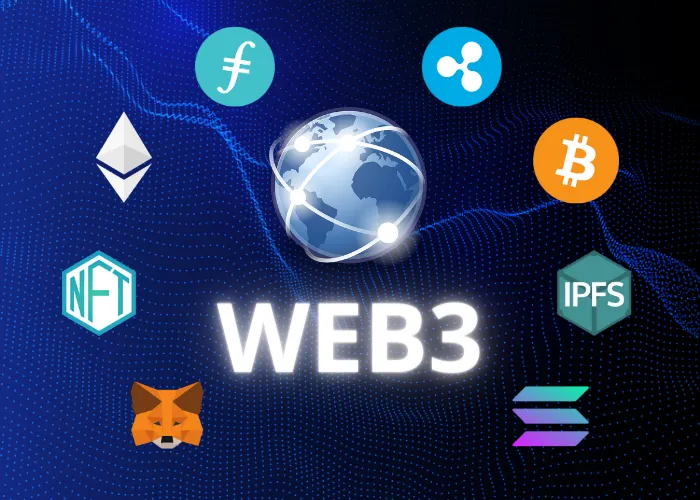
The Web3 economy is built on more than speculation and digital asset trading. Behind decentralized finance, blockchain infrastructure, data networks, decentralized storage, artificial intelligence, cross-chain communication, and Web3 applications are tokens designed to perform specific functions. These are commonly described as utility tokens.
- What Makes a Utility Token Important in the Web3 Economy?
- Chainlink (LINK): Powering Oracle Data and Blockchain Interoperability
- Filecoin (FIL): Building a Decentralized Storage Economy
- Render (RENDER): Decentralized GPU and Compute Infrastructure
- Union (U): Utility Across Cross-Chain Interoperability
- Why Utility Matters More Than a Token’s Marketing Narrative
- How to Evaluate Top Utility Tokens in 2026
- Examine the Token’s Actual Function
- Check Real Network Activity
- Study Supply and Token Unlocks
- Separate Protocol Success From Token Performance
- Utility Tokens and the Growth of the Web3 Economy
- Utility Tokens vs Governance Tokens
- Utility Tokens vs Stablecoins
- Major Risks of Investing in Utility Tokens
- Final Thoughts
- FAQs
- What are utility tokens?
- What are the top utility tokens powering Web3?
- Is LINK a utility token?
- What is FIL used for?
- Are utility tokens good investments?
- How do utility tokens gain value?
- What is the difference between a utility token and a governance token?
- How should beginners evaluate a utility token?
- Can a utility token lose all of its value?
- Why is tokenomics important for utility tokens?
A utility token can help users pay for services, secure a network, access computing or storage resources, incentivize participants, or interact with blockchain applications. Under the European Union’s Markets in Crypto-Assets Regulation (MiCA), a utility token is a crypto-asset intended solely to provide access to a good or service supplied by its issuer. In practice, however, crypto assets may have several functions, and legal classification can depend on their specific characteristics and the jurisdiction involved.
The most important question for investors and Web3 users is therefore not simply, “Which utility token is the best?” A more useful question is: “What real function does this token perform, and is that function supported by measurable network activity?”
As of August 26, 2026, current Web3 market data shows significant variation among established infrastructure tokens. For example, Chainlink reported more than $32 trillion in cumulative transaction value enabled, approximately 748 million LINK in circulating supply, and a maximum supply of 1 billion LINK. Meanwhile, current CoinMarketCap Web3-sector data lists Chainlink, Polkadot, Render, Filecoin, and Injective among notable Web3 tokens by market capitalization, although rankings and prices change continuously.
This guide examines leading utility-focused tokens powering important areas of the Web3 economy. It does not present any token as a guaranteed investment. Instead, it focuses on utility, real-world use cases, adoption evidence, token economics, risks, and the factors that beginners should evaluate before buying or using a crypto asset.
What Makes a Utility Token Important in the Web3 Economy?
The strongest utility tokens are connected to an identifiable economic function.
A decentralized oracle network may need a token to pay service providers and support cryptoeconomic security. A decentralized storage network may use its native token to coordinate payments and rewards between storage clients and providers. A decentralized GPU network may use a token to facilitate payments for rendering or computing resources.
This is different from simply creating a token and promising that it will eventually have a purpose.
Real utility generally involves three connected elements: a functioning service, a defined role for the token, and evidence that people or organizations actually use the underlying network.
The token does not need to guarantee profits to be useful. In fact, utility and investment performance are separate questions. A useful network can have a volatile token, and a token with a rising price can still have weak underlying utility.
For this article, the featured assets are selected based on the clarity of their token function and their relevance to major Web3 infrastructure categories rather than on a prediction that their prices will rise.
The Web3 economy itself is also evolving quickly. Areas such as decentralized finance, tokenized assets, AI infrastructure, decentralized physical infrastructure networks, blockchain interoperability, and decentralized storage increasingly depend on programmable networks and digital economic incentives. This makes it important to examine what a token actually does rather than relying on its category label.
Chainlink (LINK): Powering Oracle Data and Blockchain Interoperability
Chainlink is one of the clearest examples of infrastructure-focused token utility in Web3.
Smart contracts cannot independently verify all information from the outside world. Applications may need asset prices, proof of reserves, event data, cross-chain messages, or other information that exists beyond a single blockchain. Chainlink provides infrastructure designed to connect smart contracts with external data, computation, and other blockchain networks.
The LINK token plays a direct role in this ecosystem. According to Chainlink’s official economics documentation, LINK is used to pay for services, enhance network security, and incentivize reliable performance. Chainlink reports a total supply capped at 1 billion LINK, with more than 748 million circulating, while its token-release schedule is currently stated as 7% of total supply per year.
Chainlink also reports more than $32 trillion in cumulative transaction value enabled, more than 878,000 on-chain LINK holders, and more than 42 million LINK staked across the network’s reported metrics. These figures are network-reported metrics and should not be interpreted as investment guarantees.
The practical case for LINK comes from the infrastructure it supports. Developers and organizations can use Chainlink services for functions including data feeds, cross-chain interoperability, proof of reserve, and other forms of verifiable data delivery. The token can be used to compensate service providers, while staking contributes to cryptoeconomic security.
For the Web3 economy, this makes Chainlink important because many decentralized applications require reliable information that does not originate directly on their own blockchain.
The main analytical question for LINK is whether growth in network services creates sustainable token-related economic demand. Investors should distinguish between adoption of Chainlink technology and assumptions about future LINK price performance.
Filecoin (FIL): Building a Decentralized Storage Economy
Filecoin Foundation and the Filecoin network focus on a different but equally important Web3 function: decentralized data storage.
Data is a fundamental part of the digital economy. Traditional cloud infrastructure is dominated by centralized providers, while decentralized storage networks aim to coordinate storage capacity across independent participants.
FIL is central to Filecoin’s economic system. Storage clients and providers interact through a blockchain-based marketplace and incentive structure, creating a use case tied directly to data storage and related infrastructure.
Filecoin’s 2026 network strategy states that the ecosystem is shifting its focus toward increasing demand for paid, on-chain storage deals and improving network economics. The organization describes Filecoin as the world’s largest decentralized storage network and reports that the network has exbibytes of storage capacity. Its 2026 priorities include driving paid on-chain deals, strengthening profitability and cryptoeconomics, and expanding paid flagship-client adoption.
The network’s strategy also highlights applications involving AI, decentralized physical infrastructure, chain data, infrastructure, and real-world assets. Filecoin Onchain Cloud is intended to expand the ecosystem from decentralized storage toward programmable cloud services and workflows involving storage, retrieval, and computing.
This is important because utility depends increasingly on demand rather than theoretical capacity. A storage network can have large amounts of available capacity, but the stronger economic signal comes from paying users and real workloads.
As of the current Web3-sector snapshot returned by CoinMarketCap, FIL had approximately $601 million in market capitalization and roughly 825.54 million FIL in circulating supply at the time of the crawl. These are time-sensitive figures and can change.
For investors, Filecoin’s utility case should therefore be evaluated through paid storage demand, client adoption, network economics, supply dynamics, and competition from both decentralized and centralized infrastructure.
Render (RENDER): Decentralized GPU and Compute Infrastructure
Render Network represents another major Web3 theme: decentralized computing resources.
Modern digital applications increasingly require significant GPU capacity for rendering, visual effects, 3D work, and artificial intelligence workloads. A decentralized network can attempt to connect people who need computing resources with providers that have available hardware.
This creates a functional role for a network token when it is integrated into how work is paid for or settled.
Current CoinMarketCap Web3 data lists RENDER with approximately 518.77 million tokens in circulating supply and a market capitalization of roughly $787.72 million at the time of the latest crawl. These figures are market snapshots rather than fixed values.
The broader Web3 utility case for Render is straightforward: decentralized GPU resources may become increasingly relevant as demand for AI and high-performance computing grows. However, increased demand for AI infrastructure does not automatically mean a specific token will appreciate.
The critical questions are whether users are actively purchasing services through the network, whether the economics work for GPU providers, and whether decentralized infrastructure can compete effectively with centralized cloud providers.
That distinction matters. A strong industry trend does not eliminate execution, competition, liquidity, or tokenomics risk.
Union (U): Utility Across Cross-Chain Interoperability
Blockchain interoperability is another important Web3 infrastructure category.
As the industry expands across multiple networks, applications and users need ways to transfer information and assets between ecosystems. Union describes itself as a zero-knowledge interoperability network designed to function as a settlement and liquidity layer for protocols and asset issuers.
Its U token has three explicitly documented functions: serving as the native gas token in the Union Dynamic Fee Market, supporting network security through delegated proof of stake, and enabling governance.
Union’s documentation reports a genesis supply of 10 billion U tokens and an initial circulating supply of 1,919,050,000. The project also describes approximately 60% of token supply as directed toward users, builders, network development, and governance, although readers should independently review the complete token distribution and release schedule before making financial decisions.
Union is a useful example because it demonstrates that modern Web3 tokens may combine several functions.
A token can provide direct network utility while also participating in security and governance. This means the categories “utility token” and “governance token” are not always mutually exclusive.
The important analytical issue is whether the token’s role is genuinely necessary for network operations and whether future usage can be measured through verifiable network activity.
Why Utility Matters More Than a Token’s Marketing Narrative
The term “utility” is widely used in crypto marketing, but a genuine utility case requires evidence.
A token should not be considered valuable merely because a project says it will eventually be used for payments, governance, staking, discounts, or ecosystem rewards.
A stronger framework examines five areas.
First, is the underlying product functional?
Second, does the token perform an identifiable role that cannot easily be replaced?
Third, are users or organizations actively using the product?
Fourth, do the tokenomics support long-term participation rather than excessive dilution?
Finally, is the network transparent enough for users to verify important claims?
These questions are particularly important in the Web3 economy because token prices can move much faster than product adoption.
A project might announce a partnership, launch a roadmap, or receive significant social-media attention without demonstrating sustainable usage.
The most valuable metric depends on the network. For a storage protocol, paid storage demand may matter. For an oracle network, service usage and secured value may be relevant. For a compute network, completed workloads and provider economics may be more useful.
There is no universal number that proves every utility token is successful.
How to Evaluate Top Utility Tokens in 2026
A ranking based only on market capitalization can be misleading.
Market capitalization is generally calculated as:
Current token price × circulating supply
For example, if a token trades at $2 and has 500 million tokens circulating, its market capitalization is approximately $1 billion.
That number does not tell you how many tokens may enter circulation later.
This is why investors should also examine fully diluted valuation, maximum supply, unlock schedules, emissions, and major holder concentration.
Examine the Token’s Actual Function
Start with a simple question: what happens if the token disappears?
If a decentralized network cannot process payments, compensate providers, secure critical services, or provide required access without the token, its utility is easier to understand.
If the answer is that the platform could operate almost identically with another payment method, the relationship between product usage and token demand may be weaker.
Check Real Network Activity
Look for evidence beyond announcements.
Useful indicators can include transaction activity, active users, paying customers, protocol revenue where applicable, storage deals, completed compute jobs, developer activity, integrations, and independently verifiable on-chain data.
Metrics should always be interpreted in context. High transaction counts can sometimes result from automated or low-value activity.
Study Supply and Token Unlocks
Token supply can materially affect market dynamics.
If 100 million tokens are currently circulating but another 900 million may eventually enter the market, investors need to understand when and how those additional tokens will be released.
Chainlink, for example, officially reports a 1 billion maximum LINK supply and states that its current token-release schedule is 7% of total supply annually.
The appropriate lesson is not that one supply structure is automatically good or bad. Instead, supply should be understood before interpreting market capitalization.
Separate Protocol Success From Token Performance
This is one of the most important concepts in crypto analysis.
A protocol can gain users while its token performs poorly. A token can also rise sharply without equivalent growth in the underlying product.
Token value capture depends on the specific economic design.
Before buying, determine whether greater usage creates a direct, indirect, or potentially nonexistent source of demand for the token.
Utility Tokens and the Growth of the Web3 Economy
The Web3 economy can be divided into several functional layers.
Infrastructure networks provide blockspace, data, storage, computing, and interoperability. Applications build financial services, marketplaces, gaming environments, and other digital products on top of that infrastructure. Tokens can help coordinate payments, incentives, security, and participation.
Chainlink operates primarily within the data and interoperability layer. Filecoin focuses on decentralized storage and cloud infrastructure. Render represents decentralized GPU and compute resources. Union focuses on cross-chain interoperability and settlement.
These sectors address different problems, which means they should not be evaluated using exactly the same metrics.
A common mistake is to compare every token solely by price performance.
A more meaningful approach is to compare projects within their functional categories and examine whether the network is solving a real problem more effectively than available alternatives.
Utility Tokens vs Governance Tokens
The difference between utility and governance is important for beginners.
A utility token is generally associated with using a product, network, or service.
A governance token generally provides participation in decisions about a protocol, according to the rules established by that protocol.
However, one token may perform both roles.
Union’s U token, for example, is documented as having gas, security, and governance functions.
This demonstrates why token labels should not replace detailed analysis.
For a strong internal linking opportunity, this section should link to your article:
Governance Tokens vs Utility Tokens: What’s the Difference?
Another relevant internal link is:
What Are Governance Tokens and How Do They Shape Blockchain Projects?
These links help readers understand related concepts while strengthening the website’s broader topical authority around token economics and Web3 infrastructure.
Utility Tokens vs Stablecoins
Stablecoins serve a different primary purpose.
A stablecoin generally aims to maintain a relatively stable value based on a defined reference mechanism, whereas a utility token is designed around functionality inside an ecosystem.
This does not mean every utility token is highly volatile or every stablecoin is risk-free. Each asset has its own technical, market, counterparty, and regulatory risks.
For readers who want to understand the difference between crypto asset categories, useful internal links include:
What Are Stablecoins? Types, Benefits & Risks Explained
How Stablecoins Maintain Their Value: A Beginner’s Guide
USDT vs USDC vs DAI: Which Stablecoin Is the Safest?
These articles can create a logical content journey from foundational crypto education to more advanced token analysis.
Major Risks of Investing in Utility Tokens
Utility should never be confused with safety.
Market Volatility
Utility tokens can experience significant price movements. A functioning product does not guarantee a stable market price.
Token Dilution
New token issuance and scheduled unlocks can change the circulating supply. Investors should check official tokenomics documentation instead of focusing only on the current market capitalization.
Competition
A decentralized storage, oracle, or compute network may face competition from other Web3 protocols and traditional technology companies.
Regulatory Change
Crypto regulation differs across jurisdictions and continues to evolve. A token’s practical use does not automatically determine its legal treatment.
Security Risks
Smart contracts, bridges, wallets, exchanges, and network infrastructure can contain vulnerabilities. Technical security should be assessed separately from a token’s business or utility case.
Weak Value Capture
A network can become popular without creating proportional economic demand for its token. Understanding the connection between protocol usage and token economics is therefore essential.
I cannot confirm that any token listed in this article will increase in value or outperform another asset.
Final Thoughts
The Web3 economy depends on infrastructure that solves practical problems.
Data must move between blockchains and applications. Storage must be provided and verified. Computing resources must be allocated. Networks must coordinate participants across different ecosystems.
This is where utility-focused tokens become important.
Chainlink’s LINK is connected to oracle services, incentives, and network security, with Chainlink reporting more than $32 trillion in cumulative transaction value enabled and a maximum supply of 1 billion LINK. Filecoin’s FIL supports an ecosystem focused on decentralized storage, with its 2026 strategy emphasizing paid on-chain demand and expanded cloud services. Render represents the decentralized GPU and compute category, while Union’s U token is designed for gas payments, network security, and governance in a cross-chain interoperability ecosystem.
These examples show that there is no single definition of Web3 utility.
The strongest approach for users and investors is to look beyond token popularity. Examine the underlying product, identify the token’s exact function, verify network activity, study supply and unlock schedules, understand value capture, and assess the risks.
A token’s utility can provide a framework for analysis, but it is not a promise of future returns.
FAQs
What are utility tokens?
Utility tokens are crypto assets designed to provide a practical function within a blockchain ecosystem, such as paying for network services, accessing products, supporting incentives, or using decentralized infrastructure.
What are the top utility tokens powering Web3?
Examples of prominent utility-focused Web3 tokens discussed in this article include LINK for oracle and interoperability services, FIL for decentralized storage, RENDER for decentralized GPU and compute infrastructure, and U for Union’s interoperability network. Their relative market rankings and prices can change over time.
Is LINK a utility token?
LINK has documented utility within the Chainlink Network. Chainlink states that LINK is used to pay for services, enhance network security, and incentivize reliable performance.
What is FIL used for?
FIL is part of the Filecoin network’s economic system for decentralized storage and related infrastructure. Filecoin’s 2026 strategy focuses on expanding paid on-chain storage activity and programmable cloud services.
Are utility tokens good investments?
A utility token is not automatically a good investment. Its price can be affected by market conditions, token supply, network adoption, competition, liquidity, regulation, and speculation. I cannot confirm that any utility token will increase in value.
How do utility tokens gain value?
Their market value can be influenced by demand for their use, the token’s supply structure, network adoption, liquidity, and market expectations. However, real utility does not guarantee price appreciation.
What is the difference between a utility token and a governance token?
A utility token is generally associated with access or practical use, while a governance token generally gives holders a role in protocol decision-making. Some tokens combine both functions.
How should beginners evaluate a utility token?
Beginners should examine the token’s real function, the underlying product, actual network usage, supply and unlock schedules, token concentration, liquidity, security, competition, and applicable regulations.
Can a utility token lose all of its value?
Yes. A utility token can lose substantial or potentially nearly all of its market value if demand declines, the underlying project fails, competition increases, security problems occur, or market conditions change.
Why is tokenomics important for utility tokens?
Tokenomics determines how supply is created, distributed, and released. Circulating supply, maximum supply, inflation, emissions, and future token unlocks can all affect the market dynamics surrounding a token.
If you want to contribute your piece of content on Crypto, Bitcoins and other digital currencies for Bitsoz, You can search for us in Google with queries like “write for us crypto”. “Write for us bitcoins” or directly contact us and let us know what you want.