
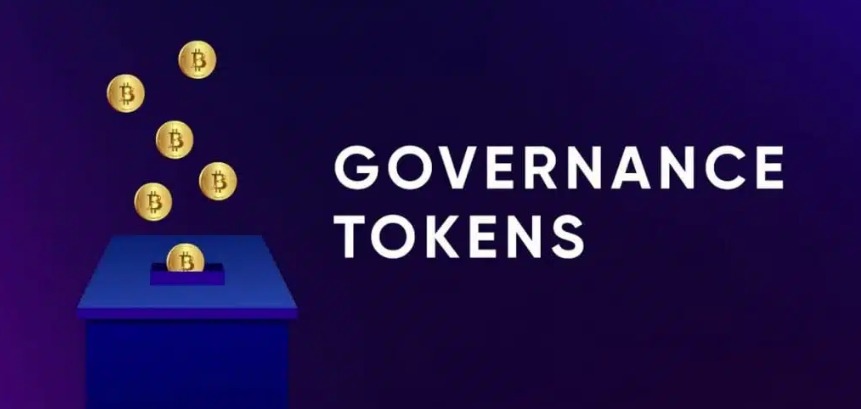
Governance tokens have become one of the most important ideas behind decentralized finance, decentralized autonomous organizations, and community-led blockchain projects. They are designed to give token holders a formal role in making decisions about how a protocol, application, or blockchain ecosystem develops.
- What Is a Governance Token?
- How Governance Tokens Work
- Governance Tokens and the Idea of Decentralization
- What Can Governance Token Holders Vote On?
- The Role of Delegation in Blockchain Governance
- One Token, One Vote: The Most Common Model
- Why Governance Token Concentration Is a Major Issue
- Governance Tokens vs Utility Tokens
- Governance Tokens vs Company Shares
- Governance Tokens in DeFi
- Maker and the Evolution of On-Chain Governance
- Governance Tokens and Protocol Treasuries
- What Is a Governance Proposal?
- Quorum and Why Participation Matters
- Timelocks and Why Approved Votes Are Not Always Executed Immediately
- Can Governance Tokens Be Bought to Control a Project?
- The Problem of Voter Apathy
- How Governance Tokens Shape the Future of Blockchain Projects
- The Benefits of Governance Tokens
- The Risks of Governance Tokens
- How Beginners Should Evaluate a Governance Token
- Governance Tokens and Regulation
- Final Thoughts
- FAQs
- What is a governance token?
- How do governance tokens work?
- Do governance tokens give you ownership of a company?
- Can governance token holders change a blockchain protocol?
- What is token-weighted voting?
- What is delegation in crypto governance?
- What is a governance proposal?
- What is quorum in blockchain governance?
- Can large token holders control governance?
- What is a governance attack?
- Are governance tokens the same as utility tokens?
- Are governance tokens securities?
- Why do blockchain projects use governance tokens?
- Do all governance votes happen on-chain?
- How can beginners evaluate a governance token?
In simple terms, a governance token can give its holder voting power. Depending on the project, that power may be used to vote on software upgrades, fee structures, treasury spending, protocol parameters, incentive programs, grants, or other governance proposals.
However, owning a governance token does not automatically mean owning equity in a company, receiving profits, or having the same legal rights as a shareholder. The rights attached to a token depend on the protocol’s design, documentation, smart contracts, and applicable law.
This distinction is increasingly important. In 2026, the U.S. Securities and Exchange Commission published updated guidance explaining that the legal treatment of crypto assets can depend on their characteristics and the way they are offered or sold. The SEC also noted that some crypto assets can become subject to federal securities laws when associated with an investment contract.
For beginners, governance tokens can therefore be understood as more than another cryptocurrency to trade. They are part of a blockchain project’s decision-making infrastructure.
This guide explains what governance tokens are, how token-based voting works, why blockchain projects use them, how proposals move from discussion to execution, the major risks of token governance, and why voting power can sometimes become concentrated despite the promise of decentralization.
What Is a Governance Token?
A governance token is a crypto asset that gives holders some level of influence over decisions within a blockchain-based protocol or organization.
The most common model is token-weighted voting. Under this system, the number of tokens a person holds—or delegates—can determine the amount of voting power they have.
For example, imagine a protocol with 10 million governance tokens eligible to vote:
- A holder with 10,000 voting tokens controls 0.1% of the total voting power.
- A holder with 100,000 voting tokens controls 1%.
- A delegate representing 2 million tokens may control 20%.
The exact rules vary significantly between protocols. Some governance systems use one-token-one-vote models, while others incorporate delegation, token locking, staking, quorum requirements, voting periods, or other mechanisms.
Ethereum.org describes token-based DAO membership as a model in which simply holding a governance token can grant voting access, while some other systems allow voting rights to be earned through participation or other contribution mechanisms.
The fundamental purpose is to distribute some decision-making authority beyond a traditional management team.
How Governance Tokens Work
A typical governance process begins when a community member, delegate, development team, or other eligible participant identifies a proposed change.
The proposal may involve a technical upgrade, a change to borrowing parameters in a DeFi protocol, new treasury spending, or an adjustment to token incentives.
The process often follows several stages:
- Discussion: The idea is debated through governance forums, community channels, or other public spaces.
- Proposal creation: A formal proposal defines the change and its implementation details.
- Voting: Eligible token holders or delegates vote according to the protocol’s governance rules.
- Quorum and approval: The proposal must meet participation and approval thresholds.
- Execution: If approved, the change may be implemented manually or automatically through smart contracts.
The final stage is particularly significant.
Some blockchain governance systems use on-chain execution, meaning that an approved proposal can trigger a smart-contract transaction automatically. Ethereum.org describes automatic transaction governance as a DAO model in which transactions can be executed after the required quorum and affirmative vote are reached.
Other projects use off-chain voting followed by execution through a multisignature wallet, development team, foundation, or other authorized mechanism.
This means that two projects can both claim to use governance tokens while operating very differently in practice.
Governance Tokens and the Idea of Decentralization
The central promise of governance tokens is decentralization.
Instead of one company, CEO, or small board making every major decision, a protocol can distribute voting authority among stakeholders.
This can be particularly useful for blockchain systems because many protocols need to change over time. Smart contracts may require security upgrades, technical parameters may need adjustment, and treasury funds may need to be allocated to development or ecosystem growth.
Ethereum.org describes DAOs as collectively owned organizations that use blockchain-based rules to govern how decisions and funds are managed. Its governance framework includes mechanisms such as delegation, token-based membership, automatic execution, and multisignature governance.
Governance tokens can therefore turn users into participants in the decision-making process.
But decentralization should not be assumed simply because a project has issued a token.
The real questions are:
Who owns the tokens?
Who actually votes?
How concentrated is voting power?
Can ordinary holders realistically influence an outcome?
Are proposals executed automatically?
Does a foundation retain special control?
Can emergency powers override token-holder decisions?
The answers reveal much more about a project’s governance than the existence of a governance token alone.
What Can Governance Token Holders Vote On?
The powers attached to governance tokens differ from one protocol to another.
In decentralized finance, token holders may vote on interest-rate models, collateral parameters, liquidation rules, supported assets, fee structures, and risk-management settings.
In a DAO, voting may determine how treasury funds are spent.
For a blockchain ecosystem, governance may cover upgrades, validator incentives, grants, or ecosystem-development programs.
A simplified example could involve a protocol treasury containing $100 million in digital assets. A governance proposal might ask token holders whether to allocate $5 million to developer grants over the next 12 months.
If the proposal passes according to the protocol’s rules, the funds could then be transferred through an approved governance transaction.
This makes governance economically significant. Voting power can potentially influence how large pools of community-controlled assets are managed.
That is why governance design is not merely a technical feature. It is also a system for allocating power.
The Role of Delegation in Blockchain Governance
One of the biggest practical problems in decentralized voting is low participation.
Many token holders do not have the time, expertise, or interest required to study complex technical proposals.
Delegation attempts to address this problem.
Instead of voting directly, a token holder can assign voting power to another participant without necessarily transferring ownership of the tokens.
Ethereum.org compares this model to representative democracy, where holders delegate voting power to individuals who actively follow governance issues and represent stakeholders. It identifies ENS as an example of delegation-based governance.
Consider a simplified protocol with 1 million governance tokens.
Suppose 500,000 tokens belong to holders who never vote. Through delegation, some of those holders could assign their voting power to 20 active governance delegates.
This may improve participation and produce more informed voting.
However, it can also concentrate power.
If a small number of delegates accumulate large amounts of delegated voting power, the governance system may begin to resemble representative governance dominated by a relatively small group.
Delegation therefore solves one problem while potentially creating another.
One Token, One Vote: The Most Common Model
The traditional token-governance formula is straightforward:
Voting power = number of eligible tokens held or delegated
Suppose Proposal A receives:
4 million votes in favor
3 million votes against
If the required quorum and approval conditions are satisfied, the proposal passes.
The advantage is simplicity. Anyone can theoretically acquire governance tokens and participate.
The disadvantage is that wealth can translate directly into political power.
A person who owns 1 million tokens may have 1,000 times the voting influence of a person holding 1,000 tokens.
This creates what is sometimes described as plutocratic governance: influence is based primarily on economic ownership.
Research has identified this concentration as a significant challenge. A 2023 analysis of Compound and Uniswap governance found that the 10 largest voters controlled 57.86% and 44.72% of voting power, respectively, in the datasets examined by the researchers. The study also found that fewer than three voters could obtain more than 50% of votes in Compound under the observed governance structure.
These figures should not be interpreted as current measurements of those protocols in 2026; they are findings from the study’s historical analysis. They do, however, illustrate why token ownership distribution matters.
Why Governance Token Concentration Is a Major Issue
A project may have thousands of token holders but still have centralized governance.
Imagine 100,000 people each hold some governance tokens. That sounds decentralized.
But if five wallets collectively control 55% of the voting power, those five holders could potentially determine most outcomes when they participate together.
Recent research has continued to identify governance concentration as a structural challenge. A 2026 study examining 48 active Ethereum-based DAOs found that governance mechanisms such as token registration, staking, and delegation could reinforce concentration of voting power under certain designs.
Another 2025 study examining governance control across DeFi protocols found persistent influential connections among major governance-token holders and observed that addresses associated with institutional investors could hold significant token supplies across multiple protocols.
The lesson for beginners is clear:
A governance token does not automatically create democratic governance.
To evaluate a protocol, users should examine both token distribution and actual voting participation.
Governance Tokens vs Utility Tokens
Governance tokens and utility tokens can overlap, but they are not identical concepts.
A utility token is generally designed to provide access to a product, service, network function, or other practical use.
A governance token primarily provides some level of influence over decisions.
A single token can potentially perform both roles.
For example, a token might be used for:
- Voting on protocol proposals
- Paying fees
- Staking
- Accessing network services
- Participating in incentive programs
The more functions a token has, the more important it becomes to understand exactly which rights are attached to it.
The SEC’s 2026 educational materials distinguish among categories such as digital commodities, digital collectibles, digital tools, stablecoins, and digital securities. It also emphasizes that legal analysis can depend on the facts and circumstances surrounding a crypto asset and the transaction in which it is offered or sold.
Therefore, no governance token should automatically be described as a security or a non-security simply because it has voting functionality.
Governance Tokens vs Company Shares
This is one of the most important distinctions for new investors.
Owning a governance token does not automatically mean owning part of a company.
A shareholder may have legally defined rights, which can include voting rights, economic interests, dividends where declared, and rights associated with the underlying corporate structure.
A governance-token holder may have completely different rights.
The token may only allow voting on a blockchain protocol.
It may provide no legal claim on revenue.
It may provide no claim on the assets of a foundation, company, or development team.
It may provide no right to dividends.
The SEC’s 2026 materials specifically explain that rights associated with crypto assets can vary and that tokenized instruments may provide different economic or voting rights depending on their structure.
Beginners should therefore read the project’s documentation rather than assuming that voting power equals ownership.
Governance Tokens in DeFi
Governance tokens became especially important in decentralized finance.
DeFi protocols often operate with large amounts of user deposits and complex risk parameters.
Someone needs to decide:
Which assets should be supported?
What collateral ratios should apply?
How high should protocol fees be?
Should a new version of the protocol be deployed?
How should treasury assets be allocated?
A governance system creates a framework for making those decisions.
However, governance in DeFi can involve substantial technical and financial risk.
A poorly designed proposal could potentially affect borrowing markets, liquidity incentives, collateral requirements, or the protocol’s security.
This is why many large protocols use governance forums, technical reviews, risk teams, timelocks, multisignature controls, and staged implementation processes.
Token voting is often only one component of the broader governance architecture.
Maker and the Evolution of On-Chain Governance
MakerDAO has historically been one of the best-known examples of token-based governance in DeFi.
Ethereum.org identifies MakerDAO’s MKR as an example of token-based membership where holders can participate in decisions affecting the protocol.
The broader principle is more important than the specific project.
A stablecoin system needs ongoing decisions about collateral, risk, system parameters, and governance.
Token holders can participate in determining those rules.
This demonstrates how governance tokens can shape the actual economic behavior of a protocol.
A vote is not simply symbolic when it changes the rules governing billions of dollars in digital assets.
Governance Tokens and Protocol Treasuries
Treasury management is one of the most powerful uses of governance tokens.
A DAO may control a treasury containing stablecoins, governance tokens, Ether, Bitcoin, or other assets.
Governance proposals can determine whether those funds are used for:
Developer grants
Security audits
Marketing
Liquidity incentives
Research
Community initiatives
Token buybacks, where legally and technically applicable
Strategic investments
Imagine a DAO with a $50 million treasury.
A proposal could request $2 million for a one-year security research program.
If token holders approve the proposal, the governance system may authorize the allocation.
This gives token holders influence over real financial resources.
But it also creates governance risks.
A hostile actor who acquires sufficient voting power might attempt to redirect funds.
This is why mature governance systems may use safeguards such as timelocks, proposal thresholds, multisignature execution, and emergency controls.
What Is a Governance Proposal?
A governance proposal is a formal request to change something within a blockchain project.
The quality of proposals matters.
A strong proposal should explain:
What is changing?
Why is the change necessary?
What are the expected benefits?
What are the risks?
How will the change be implemented?
What happens if the proposal fails?
How much treasury funding is required, if any?
For complex blockchain projects, proposals may go through several stages before a final vote.
An informal community discussion might become a formal governance request, followed by a technical review and then an on-chain vote.
This layered process can improve decision-making by giving experts and community members time to identify problems before irreversible changes are made.
Quorum and Why Participation Matters
A quorum is the minimum amount of voting participation required for a proposal to be valid.
Suppose a protocol has 10 million eligible votes.
It may require at least 2 million votes to participate before any proposal can pass.
Without a quorum requirement, a small number of active voters could potentially make major decisions while most token holders remain inactive.
Quorum creates a trade-off.
If it is too low, governance may be captured by a small group.
If it is too high, legitimate proposals may repeatedly fail because too few holders participate.
The same problem applies to approval thresholds.
A simple majority requires more than 50% of counted votes to support a proposal.
Other systems may require higher thresholds for particularly important decisions.
For example, changing a fee parameter may require a simple majority, while changing core protocol governance might require a supermajority.
Good governance design recognizes that not every decision carries the same level of risk.
Timelocks and Why Approved Votes Are Not Always Executed Immediately
In blockchain governance, immediate execution can be dangerous.
Imagine that a malicious proposal passes because of a governance attack.
If execution occurs instantly, users may have no opportunity to react.
A timelock introduces a delay between approval and execution.
For example:
Day 1: Proposal passes
Day 2: Execution is scheduled
Day 3–5: Timelock period
Day 6: Approved transaction becomes executable
During the delay, users and security teams can review the approved action.
Timelocks can provide a critical safety layer, although they do not eliminate governance risk.
They are especially relevant when governance decisions can directly modify smart contracts or transfer treasury funds.
Can Governance Tokens Be Bought to Control a Project?
Potentially, yes.
In a token-weighted system, buying or borrowing sufficient voting power may create significant influence.
This is often described as a governance attack.
A simple hypothetical example illustrates the risk.
Suppose a protocol has 10 million tokens, but only 2 million are usually used in governance votes.
If an attacker can temporarily acquire or control enough voting power, they may be able to influence a low-participation vote.
Protocols attempt to reduce this risk through mechanisms such as:
Token locking
Voting delays
Proposal thresholds
Timelocks
Delegation systems
Snapshot mechanisms
Quorum requirements
Security councils or emergency controls
The design challenge is balancing openness with protection.
A system that is too open may be easier to manipulate.
A system with too many centralized safeguards may undermine the purpose of decentralized governance.
The Problem of Voter Apathy
Token concentration is not the only problem.
Even widely distributed governance tokens may produce centralized outcomes if most holders do not vote.
Suppose a protocol has 1 million token holders but only 2% participate.
A relatively small active group may effectively control governance.
Why don’t holders vote?
Governance proposals can be technical.
Voting may require time and research.
Transaction fees can create friction in some systems.
Small holders may believe their vote has little impact.
Some users hold tokens primarily for speculation rather than governance.
Delegation is one response to voter apathy, but it can also centralize power in a smaller group of professional delegates.
This creates a recurring governance trade-off: higher participation is desirable, but informed participation can be difficult to achieve at scale.
How Governance Tokens Shape the Future of Blockchain Projects
Governance tokens can influence a project’s future in at least five major ways.
First, they determine who has formal influence.
Second, they establish how protocol changes are approved.
Third, they can control treasury spending and ecosystem investment.
Fourth, they create incentives for users, investors, developers, and delegates to participate.
Fifth, they can influence how decentralized a project actually becomes over time.
For example, a protocol may begin with significant control held by its founding team.
As governance tokens become more widely distributed and the team relinquishes special powers, community governance may increase.
But the opposite can also occur.
Token accumulation, delegation, and institutional ownership may concentrate voting power among a small group.
Decentralization is therefore not a permanent state.
It is an ongoing property shaped by token distribution, participation, governance rules, and real-world behavior.
The Benefits of Governance Tokens
Governance tokens can create genuine advantages when designed carefully.
They allow global communities to coordinate without relying entirely on traditional corporate structures.
They can make decision-making more transparent because proposals and votes are often publicly visible on blockchain networks or governance platforms.
They can align active stakeholders with the long-term development of a protocol.
They can also create a formal mechanism for changing blockchain rules without relying solely on a founding team.
Ethereum.org emphasizes that DAO governance can enable collectively managed treasuries and rule-based decision-making rather than allowing a single executive to unilaterally control organizational funds.
For open-source blockchain projects, this can be particularly powerful.
A protocol used by people worldwide can theoretically be governed by participants worldwide.
The Risks of Governance Tokens
Governance tokens also carry significant risks.
The first is concentration. Large holders may dominate.
The second is low participation. A small group may effectively govern an otherwise large community.
The third is technical complexity. Voters may approve proposals they do not fully understand.
The fourth is economic conflict. Token holders may favor decisions that increase short-term token value over decisions that improve the protocol’s long-term health.
The fifth is governance capture.
The sixth is regulatory uncertainty.
The SEC’s current guidance makes clear that the legal treatment of crypto assets and transactions depends on their facts and circumstances, including whether an offering or sale involves an investment contract under applicable federal securities laws.
For these reasons, buying a governance token should not be treated as a simple investment decision based only on price charts.
The governance model itself is part of the asset’s risk profile.
How Beginners Should Evaluate a Governance Token
Before acquiring a governance token, beginners should study the governance system behind it.
Start with token distribution.
How many tokens exist?
How many are circulating?
How much is controlled by founders, foundations, investors, exchanges, or treasury wallets?
Then look at voting participation.
How many wallets typically vote?
Who are the largest delegates?
How much voting power does the top group control?
Next, examine the proposal process.
Can anyone submit a proposal?
Is there a minimum token threshold?
How long does voting last?
What is the quorum?
What approval percentage is required?
Finally, examine execution.
Are successful votes automatically executed on-chain?
Does a multisignature group execute the decision?
Is there a timelock?
Are emergency powers held by a small group?
These questions provide a far better picture of governance quality than simply checking a token’s market price.
Governance Tokens and Regulation
The regulatory treatment of governance tokens remains an important and evolving issue.
In the United States, the SEC stated in March 2026 that it had issued an interpretation addressing how federal securities laws apply to certain crypto assets and transactions. The SEC’s guidance included a taxonomy covering digital commodities, digital collectibles, digital tools, stablecoins, and digital securities.
The SEC also explains that a crypto asset that is not itself a security may nevertheless be offered or sold as part of an investment contract if the relevant legal elements are present.
Therefore, a token’s label as a “governance token” is not enough by itself to determine its legal status.
Projects, investors, and users should avoid making blanket legal claims without analyzing the specific facts, rights, promotional statements, and jurisdiction involved.
Final Thoughts
Governance tokens are one of the main tools blockchain projects use to distribute decision-making authority among users and stakeholders.
They can allow token holders to vote on software upgrades, protocol rules, treasury spending, risk parameters, and ecosystem development. In some systems, approved decisions can even be executed automatically through smart contracts.
But governance tokens do not guarantee decentralization.
The real distribution of power depends on who owns the tokens, who participates in voting, how delegation works, what quorum is required, and whether large holders can dominate decisions. Research into DeFi and DAO governance has repeatedly identified voting-power concentration as an important challenge.
For beginners, the most important question is not simply, “What does this governance token cost?”
A better question is, “What power does this token actually provide, and how is that power distributed?”
Understanding that difference can help users evaluate whether a blockchain project is genuinely community governed, partially decentralized, or still heavily influenced by a relatively small group.
FAQs
What is a governance token?
A governance token is a crypto asset designed to give holders voting rights or other forms of influence over decisions within a blockchain protocol, DAO, or decentralized application. The specific rights depend on the project’s governance rules.
How do governance tokens work?
Governance tokens typically give holders voting power. Token holders can vote directly or delegate their voting power to another participant. Depending on the project, votes may influence protocol upgrades, treasury spending, fees, incentives, or other decisions.
Do governance tokens give you ownership of a company?
Not necessarily. Holding a governance token does not automatically provide equity, dividends, or a legal ownership claim in a company. The rights attached to each token depend on its design and applicable legal framework.
Can governance token holders change a blockchain protocol?
In many projects, yes. Governance proposals can be used to approve changes to smart contracts, technical parameters, protocol rules, or other parts of a blockchain ecosystem. The exact process depends on the governance architecture.
What is token-weighted voting?
Token-weighted voting is a system in which voting power is generally based on the number of eligible governance tokens a participant holds or controls through delegation.
What is delegation in crypto governance?
Delegation allows a token holder to assign voting power to another participant, often called a delegate, without necessarily transferring ownership of the tokens. Ethereum.org describes delegation as similar to representative democracy in DAO governance.
What is a governance proposal?
A governance proposal is a formal request to make a change to a blockchain project. Depending on the protocol, it may concern treasury spending, fees, software upgrades, incentives, or technical parameters.
What is quorum in blockchain governance?
Quorum is the minimum level of voting participation required for a proposal to be considered valid or eligible to pass. It is intended to reduce the risk that a very small group makes major decisions.
Can large token holders control governance?
Yes. In token-weighted systems, large holders can have substantial influence. Academic research has found significant voting-power concentration in some DeFi and DAO governance systems.
What is a governance attack?
A governance attack occurs when an individual or coordinated group acquires, borrows, delegates, or otherwise controls enough voting power to manipulate governance decisions.
Are governance tokens the same as utility tokens?
No. Governance tokens primarily relate to decision-making power, while utility tokens are generally designed to provide access to a product or network function. However, a single token can potentially have both governance and utility functions.
Are governance tokens securities?
I cannot confirm that any governance token is or is not a security based solely on its name or voting functionality. The SEC states that the application of federal securities laws to crypto assets and transactions depends on the relevant facts and circumstances, including whether a transaction involves an investment contract.
Why do blockchain projects use governance tokens?
Projects use governance tokens to distribute decision-making, coordinate stakeholders, manage protocol changes, govern community treasuries, and potentially reduce reliance on a centralized management structure.
Do all governance votes happen on-chain?
No. Some projects use fully on-chain voting and execution, while others conduct voting off-chain and rely on multisignature wallets, foundations, developers, or other authorized parties to implement approved decisions.
How can beginners evaluate a governance token?
Beginners should examine token distribution, voting participation, delegation, quorum requirements, proposal rules, treasury controls, execution mechanisms, timelocks, major holders, and the actual rights attached to the token. Price alone does not explain how a governance system works.
If you want to contribute your piece of content on Crypto, Bitcoins and other digital currencies for Bitsoz, You can search for us in Google with queries like “write for us crypto”. “Write for us bitcoins” or directly contact us and let us know what you want.