

Decentralized finance, commonly called DeFi, is a part of the cryptocurrency and blockchain ecosystem that attempts to provide financial services through blockchain networks, smart contracts, and decentralized applications instead of relying entirely on traditional financial intermediaries such as banks, brokers, and centralized exchanges.
- What Is Decentralized Finance?
- How Does DeFi Work?
- What Is a DeFi Protocol?
- What Are the Main Uses of DeFi?
- Decentralized Exchanges (DEXs)
- DeFi Lending and Borrowing
- What Are Stablecoins in DeFi?
- What Is Liquidity Providing?
- What Is Impermanent Loss?
- What Does APY Mean in DeFi?
- Where Does DeFi Yield Come From?
- What Is Total Value Locked (TVL) in DeFi?
- Why Has DeFi Become Important?
- DeFi vs Traditional Finance
- DeFi vs Centralized Finance (CeFi)
- What Are the Benefits of DeFi?
- What Are the Risks of DeFi?
- Smart-Contract Risk
- Oracle Risk
- Bridge Risk
- Liquidity Risk
- Liquidation Risk
- Governance Risk
- Economic Risk
- Regulatory Risk
- How Much Money Can You Make With DeFi?
- Is DeFi Safe for Beginners?
- How Beginners Can Evaluate a DeFi Protocol
- What Is a DeFi Wallet?
- What Are Gas Fees in DeFi?
- DeFi and Staking: Are They the Same?
- DeFi and Cryptocurrency: What Is the Difference?
- What Is the Future of DeFi?
- DeFi: Key Terms Beginners Should Know
- DeFi Beginner Checklist
- Final Takeaway
- Frequently Asked Questions About DeFi
- What does DeFi stand for?
- What is DeFi in simple terms?
- How does DeFi make money?
- Is DeFi the same as cryptocurrency?
- Is DeFi the same as a decentralized exchange?
- Can you lose money in DeFi?
- Is DeFi regulated?
- What is TVL in DeFi?
- What is a DeFi liquidity pool?
- What is impermanent loss in DeFi?
- Is DeFi safer than traditional finance?
- Do I need a crypto wallet to use DeFi?
- Can beginners use DeFi?
At its simplest, DeFi allows people to perform activities such as swapping digital assets, lending and borrowing, providing liquidity, earning protocol fees, and interacting with financial applications through blockchain-based software.
But the phrase “decentralized finance” can be misleading if it is interpreted to mean that every DeFi application has no centralized control whatsoever. The International Organization of Securities Commissions (IOSCO) notes that there is no universally accepted definition of DeFi and that some arrangements marketed as DeFi can perform functions similar to traditional financial intermediaries. The Bank for International Settlements (BIS) has likewise highlighted governance and concentration issues within supposedly decentralized systems.
That distinction is important for beginners.
DeFi is not simply “banking without banks.” It is better understood as a collection of blockchain-based financial protocols and applications that automate some financial functions using code.
Ethereum describes DeFi as a collection of financial products and services that can allow users to borrow, save, invest, trade, and perform other financial activities through blockchain-based applications.
This guide explains what DeFi is, how it works, its major applications, how people interact with DeFi protocols, where returns come from, the risks involved, how DeFi differs from traditional finance and centralized crypto services, and what beginners should understand before using it.
What Is Decentralized Finance?
Decentralized finance is an ecosystem of blockchain-based financial applications and protocols designed to provide financial functions without depending on a traditional centralized intermediary for every transaction.
Traditional finance generally involves institutions that sit between users and financial markets.
For example:
A bank can hold deposits and provide loans.
A brokerage can execute securities trades.
An exchange can match buyers and sellers.
A payment processor can route transactions.
An insurer can pool risk and pay claims.
In DeFi, some of these functions can instead be implemented through smart contracts.
A smart contract is software deployed on a blockchain that executes predefined instructions. On Ethereum, smart contracts are programs stored at blockchain addresses, and users interact with them by sending transactions that trigger specific functions.
This creates a different operating model:
User → crypto wallet → DeFi application → smart contract → blockchain
Rather than opening an account with a bank and asking the institution to process a transaction, a DeFi user can connect a compatible wallet to a decentralized application and authorize a blockchain transaction.
However, the software does not eliminate all intermediaries, risks, or centralized components. Governance systems, development teams, front-end interfaces, stablecoin issuers, oracle providers, blockchain validators, bridges, and other infrastructure can introduce points of concentration.
How Does DeFi Work?
To understand DeFi, it helps to separate the ecosystem into several layers.
Ethereum’s own explanation describes DeFi in terms of the blockchain, assets, protocols, and applications. The BIS also uses a layered framework for understanding DeFi’s technical architecture.
1. Blockchain Networks
The blockchain provides the underlying settlement environment.
Ethereum is one of the most important networks associated with DeFi, although DeFi applications also exist on other blockchain networks.
The blockchain records transactions and maintains the state of accounts and smart contracts.
When a user swaps tokens or supplies assets to a lending protocol, the resulting transaction is recorded on the relevant blockchain.
2. Crypto Assets
DeFi applications require digital assets.
These may include native blockchain assets such as ETH, stablecoins, wrapped assets, governance tokens, and other blockchain-based tokens.
Ethereum’s token standards, such as ERC-20, provide common interfaces that help tokens interact with wallets, decentralized exchanges, and other applications.
3. Smart Contracts
Smart contracts contain the rules that make a DeFi protocol operate.
For example, a lending protocol can contain code governing:
- Deposits
- Borrowing
- Collateral
- Interest calculations
- Liquidations
- Repayments
A decentralized exchange can use smart contracts to manage token swaps and liquidity pools.
Because these rules are encoded in software, transactions can be executed automatically when the required conditions are met.
4. DeFi Applications
Users generally interact with DeFi through a website or decentralized application interface.
The interface makes complex blockchain functions easier to use.
Behind that interface may be one or more smart contracts operating on a blockchain.
This distinction matters because the website you see is not necessarily the same thing as the protocol itself. A front-end can provide access to smart contracts, while the underlying contracts continue to exist on the blockchain.
Ethereum describes decentralized applications, or dapps, as applications whose backend logic runs through decentralized networks rather than conventional centralized servers.
What Is a DeFi Protocol?
A DeFi protocol is a set of blockchain-based smart contracts and rules designed to perform a particular financial function.
Examples include protocols for:
- Decentralized trading
- Lending and borrowing
- Stablecoins
- Derivatives
- Asset management
- Liquid staking
- Payments
- Yield strategies
- Liquidity provision
The word “protocol” is important because DeFi is generally not one company or one platform.
A protocol can consist of smart contracts deployed on a blockchain, governance mechanisms, token economics, supporting infrastructure, and user interfaces.
Different protocols can also interact with each other.
This property is known as composability.
Ethereum compares smart-contract composability to building with Lego blocks: developers can combine existing contracts and applications to create new systems instead of building every component from scratch.
Composability is one of DeFi’s most important characteristics because it allows one application to become a building block for another.
It also creates additional risk.
If Protocol A depends on Protocol B, and Protocol B experiences a security failure, Protocol A can potentially be affected as well.
What Are the Main Uses of DeFi?
DeFi covers a wide range of financial activities. The most important categories for beginners are decentralized exchanges, lending, borrowing, stablecoins, liquidity provision, staking-related applications, and derivatives.
Decentralized Exchanges (DEXs)
A decentralized exchange, or DEX, allows users to trade crypto assets through blockchain-based protocols rather than placing orders through a conventional centralized exchange in the same way.
Many DEXs use automated market makers (AMMs).
Instead of maintaining a traditional order book with a centralized matching engine, an AMM can use liquidity pools containing pairs or groups of assets.
Users interact with smart contracts to swap tokens.
For example, imagine a liquidity pool containing ETH and a stablecoin.
A trader wanting to exchange ETH for the stablecoin interacts with the protocol. The smart contract calculates the trade according to the pool’s pricing mechanism and available liquidity.
Liquidity providers supply assets to the pool and may receive a portion of trading fees, depending on the protocol.
However, providing liquidity is not equivalent to earning guaranteed interest.
Liquidity providers can face risks including price volatility, impermanent loss, smart-contract vulnerabilities, and changes in trading activity.
The BIS specifically identifies automated market makers as a major component of the DeFi ecosystem and notes that DeFi trading mechanisms introduce their own financial risks and complexities.
DeFi Lending and Borrowing
DeFi lending protocols allow users to supply crypto assets to pools and potentially earn interest generated by borrowers.
Borrowers generally provide collateral rather than simply applying for an unsecured loan based on a credit score.
For example, a simplified arrangement could look like this:
A user deposits $10,000 worth of eligible crypto assets.
The protocol allows another user to borrow against collateral according to its rules.
The borrower pays interest.
Some of that interest may be distributed to liquidity suppliers.
If the value of the borrower’s collateral falls too far, the protocol can trigger liquidation mechanisms.
This is fundamentally different from a conventional bank loan.
A bank can assess a borrower’s income, credit history, employment, collateral, and other information. A DeFi lending protocol generally relies on programmed collateral requirements and blockchain-based data rather than the same underwriting process.
That can make DeFi lending highly transparent at the transaction level while also creating different risks.
What Are Stablecoins in DeFi?
Stablecoins are crypto assets designed to maintain a relatively stable value relative to another asset, commonly a fiat currency such as the U.S. dollar.
They play a major role in DeFi because many users do not want every transaction or loan to be denominated directly in a volatile cryptocurrency.
A stablecoin can therefore serve as:
- A trading pair
- Collateral
- A lending asset
- A settlement asset
- A medium for moving value between applications
But “stable” does not mean risk-free.
Stablecoins can have different designs, including fiat-backed, crypto-collateralized, and algorithmic mechanisms. Their risks depend heavily on the assets, reserves, redemption arrangements, governance, and technical architecture behind them.
The BIS has identified stablecoins as an important component of crypto and DeFi markets while also highlighting liquidity, run, and interconnectedness risks.
What Is Liquidity Providing?
Liquidity providers supply assets to a DeFi protocol so that other users can trade or interact with the protocol.
In return, liquidity providers may receive a share of transaction fees or other protocol incentives.
Consider a simplified example.
Suppose a liquidity pool has $2 million in total assets and generates $20,000 in eligible trading fees during a particular period.
Ignoring all other factors, the gross fee amount equals 1% of the pool’s starting capital for that period.
But that does not mean every liquidity provider earns 1%.
Individual returns depend on the amount contributed, the duration of participation, changes in pool composition, fees, incentives, asset prices, and other factors.
Liquidity providers can also experience impermanent loss.
What Is Impermanent Loss?
Impermanent loss occurs when the relative prices of assets in a liquidity pool change compared with simply holding those assets outside the pool.
It is called “impermanent” because the difference can change over time and may shrink if asset prices move back toward their previous relationship.
However, the loss can become effectively realized when liquidity is withdrawn under unfavorable conditions.
This is one of the most misunderstood concepts in DeFi.
A liquidity pool can advertise attractive fee revenue while the liquidity provider’s overall return is negative because of token price movements.
Therefore, investors should evaluate total economic return rather than looking only at advertised annual percentage yields.
What Does APY Mean in DeFi?
DeFi platforms frequently display APR or APY.
APR generally refers to an annualized rate without assuming reinvestment of returns.
APY generally incorporates compounding.
For example, a hypothetical 10% APR does not automatically mean a user will earn exactly 10% after one year.
If rewards fluctuate, token prices change, fees are deducted, or the position is exposed to other risks, the actual result can be very different.
Some DeFi interfaces may also display extremely high short-term APYs because of temporary token incentives.
A quoted yield should therefore be treated as a current protocol metric rather than a guaranteed investment return.
Where Does DeFi Yield Come From?
One of the most important questions beginners should ask is:
“Where is this yield actually coming from?”
There are several possibilities.
Borrower Interest
A lending protocol can generate interest from borrowers. A portion can potentially flow to liquidity suppliers after protocol fees.
Trading Fees
DEX users may pay transaction or trading fees. Depending on the protocol’s design, some fees can be distributed to liquidity providers or other participants.
Token Incentives
Protocols can distribute newly issued or existing tokens to encourage liquidity or usage.
This can create high headline yields, but the reward token itself may decline substantially in value.
Staking or Network Rewards
Some applications integrate staking mechanisms where rewards originate from blockchain-level issuance or transaction economics.
Other Protocol Revenue
Certain protocols generate revenue through specific services, fees, or financial products.
The economic source of yield matters more than the percentage shown on a dashboard.
A 20% yield generated from sustainable user fees is economically different from a 20% yield largely funded by newly issued tokens.
What Is Total Value Locked (TVL) in DeFi?
Total Value Locked, usually abbreviated as TVL, is one of the most frequently cited metrics in DeFi.
It broadly represents the value of assets held in a protocol’s smart contracts.
DefiLlama defines protocol TVL as the value of coins held in the protocol’s smart contracts and compares the metric conceptually with assets under management in traditional finance.
TVL can be useful for understanding the scale of a protocol or sector, but it should not be treated as equivalent to revenue, profit, trading volume, or user count.
For example, if the price of an asset rises, the dollar value of TVL can increase even if the number of tokens deposited does not change.
Similarly, a protocol with high TVL is not automatically safer than one with lower TVL.
TVL is a size indicator, not a security certification.
Why Has DeFi Become Important?
DeFi has attracted attention because blockchain networks allow financial transactions to be represented and executed through programmable software.
Ethereum’s current DeFi overview describes applications that support activities including borrowing, saving, investing, and trading and notes that tens of billions of dollars of crypto assets have flowed through DeFi applications.
The broader ecosystem has also become a subject of serious analysis by central banks and global financial regulators.
The BIS describes DeFi as a rapidly expanding segment of crypto markets and notes that it attempts to reproduce many economic functions found in traditional finance using blockchain-based technology. Its 2025 analysis examines decentralized exchanges, smart contracts, stablecoins, and related financial stability implications.
IOSCO has also developed policy recommendations specifically addressing DeFi products, services, activities, and arrangements. Its work highlights investor protection, market integrity, technological complexity, and regulatory challenges.
This regulatory attention is an important E-E-A-T signal for educational content: DeFi is not merely a cryptocurrency trend discussed by online communities; it is also being studied by international financial institutions and securities regulators.
DeFi vs Traditional Finance
The easiest way to understand DeFi is to compare the operating models.
| Feature | Traditional Finance | DeFi |
| Core infrastructure | Banks, exchanges, brokers and other institutions | Blockchain networks and smart contracts |
| Account access | Usually institution-based | Often wallet-based |
| Transactions | Processed by financial intermediaries | Often executed through blockchain transactions |
| Operating hours | Often defined by institution/market | Many protocols operate continuously |
| Custody | Frequently third-party custody | Often non-custodial, depending on application |
| Transparency | Institution and regulator dependent | Blockchain transactions and contract data can be publicly visible |
| Identity | Usually verified through regulated processes | Often wallet-address based, although interfaces may impose identity requirements |
| Governance | Corporate and regulatory structures | Protocol governance plus developers and other participants |
| Main risks | Counterparty, market, operational and regulatory risks | Smart-contract, oracle, bridge, liquidity, market, governance and regulatory risks |
The comparison should not be interpreted as “DeFi is safer” or “traditional finance is safer.”
They have different structures and therefore different risk profiles.
The BIS specifically warns that DeFi can reproduce familiar financial vulnerabilities such as excessive leverage, liquidity mismatches, and interconnectedness while adding technology-specific risks.
DeFi vs Centralized Finance (CeFi)
DeFi is also different from centralized crypto finance, commonly called CeFi.
A centralized crypto exchange may provide a familiar web interface, custody services, order matching, customer support, account recovery, and other centralized functions.
A DeFi protocol may instead allow users to interact directly with smart contracts from a crypto wallet.
The distinction is particularly important for custody.
With self-custodial DeFi, users generally control the private keys for their wallet. The user is responsible for signing transactions and protecting those credentials.
That creates more direct control but also more responsibility.
If a user signs a malicious transaction or loses control of a private key, there may be no centralized institution capable of reversing the transaction.
This is one reason beginners should understand crypto wallet security before interacting with DeFi.
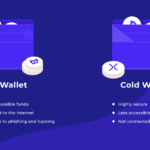
Internal linking opportunity: Link “crypto wallet security and private keys” to your existing Crypto Wallet Explained or Hot Wallet vs Cold Wallet article.
What Are the Benefits of DeFi?
DeFi’s potential advantages come primarily from programmability, open access, composability, and blockchain-based settlement.
Open Access
Many DeFi applications can be accessed by anyone who has a compatible wallet and the required assets and network access.
However, “permissionless” does not mean that every application is legally or technically available to every person in every jurisdiction.
Interfaces may impose restrictions, and local laws can apply.
Programmability
Financial functions can be expressed through software.
This enables automated collateral management, token swaps, lending rules, liquidity mechanisms, and other financial operations.
Composability
Protocols can interact with one another.
A lending protocol can potentially interact with a decentralized exchange, a stablecoin, and another smart contract-based application.
This creates an ecosystem where applications can become building blocks for other applications.
Transparency
Many blockchain transactions and smart-contract states can be publicly inspected.
That can provide a degree of transaction-level transparency that differs from traditional financial systems.
But transparency does not necessarily mean simplicity.
Blockchain data can be technically difficult to interpret, and public code does not guarantee that users understand its consequences.
IOSCO specifically notes that while DeFi code and blockchain data can be visible, interpreting them may require significant technical knowledge.
What Are the Risks of DeFi?
Understanding DeFi risks is more important than understanding its potential yield.
DeFi combines financial risk with software and infrastructure risk.
Smart-Contract Risk
A smart contract can contain bugs or vulnerabilities.
If the contract controls user funds, an exploit can potentially result in losses.
Ethereum itself notes that immutable smart contracts can create a security trade-off: code that cannot easily be changed can make it difficult to fix vulnerabilities after deployment.
An audit can reduce certain risks, but an audit is not a guarantee that a protocol is secure.
Oracle Risk
Smart contracts cannot inherently retrieve real-world information by themselves.
They may therefore depend on oracles to obtain external information such as asset prices.
Ethereum explains that oracles provide a mechanism for bringing off-chain data into smart contracts.
If an oracle provides incorrect or manipulated data, a protocol can potentially execute incorrect financial operations.
Bridge Risk
Cross-chain bridges can introduce additional technical dependencies.
A bridge may hold or control assets through smart contracts or other infrastructure.
A failure in bridge design, validation, custody, or contract logic can create significant losses.
Liquidity Risk
A token may appear valuable on paper but have insufficient market liquidity.
During periods of market stress, exiting a position can become difficult or expensive.
Liquidation Risk
DeFi loans are frequently collateralized.
If collateral value falls below required thresholds, a protocol may liquidate the position.
Rapid crypto price movements can therefore create losses even when the borrower believes the collateral is sufficient.
Governance Risk
Many protocols use governance tokens or other mechanisms to determine changes.
This means that decentralization does not necessarily mean that nobody controls the system.
BIS research specifically argues that governance requirements can create concentration of power and what it calls a “decentralisation illusion” in parts of DeFi.
Economic Risk
A protocol can function exactly as designed and still produce poor economic outcomes for users.
Token prices can fall.
Trading volumes can decline.
Borrowing demand can disappear.
Liquidity incentives can change.
Interest rates can move.
A high advertised yield does not eliminate these risks.
Regulatory Risk
The legal status of DeFi activities varies by jurisdiction and by the actual structure of the application.
IOSCO’s global recommendations emphasize that DeFi arrangements can perform functions similar to traditional financial intermediaries and may fall within regulatory frameworks depending on the circumstances.
In the United States, regulatory discussions have continued to evolve. For example, SEC materials from 2026 discuss questions around non-custodial DeFi interfaces and circumstances in which activities may or may not implicate securities regulation. These discussions do not create a universal legal classification for every DeFi protocol.
Users should therefore check the rules applicable in their own jurisdiction rather than assuming that calling an application “DeFi” places it outside regulation.
How Much Money Can You Make With DeFi?
There is no universal DeFi return.
Potential returns can come from trading fees, lending interest, staking-related rewards, token incentives, or changes in asset prices.
But each source has corresponding risks.
Consider a hypothetical example.
Suppose someone supplies $5,000 to a protocol with a quoted annual yield of 8%.
A simple calculation would be:
$5,000 × 8% = $400
That produces a hypothetical $400 gross annual return if the 8% rate remained constant and all other factors were ignored.
But real-world results can differ substantially.
If the yield changes to 4%, the annualized amount becomes $200.
If the deposited asset falls 20% in market value, the dollar value of the position can decline despite the yield.
If smart-contract losses occur, the outcome could be much worse.
Therefore, DeFi should not be presented as guaranteed passive income.
This is particularly important when comparing DeFi yield with traditional savings accounts or other financial products.
Is DeFi Safe for Beginners?
There is no simple yes-or-no answer.
DeFi applications vary enormously in design, maturity, liquidity, governance, code quality, economic model, and infrastructure.
A beginner should assume that DeFi involves substantial risk until the specific protocol and transaction have been independently evaluated.
IOSCO has identified investor protection concerns including fraud, information asymmetry, technological complexity, market risks, and the possibility that users may lack important disclosures.
The SEC has similarly warned that DeFi presents risks and challenges for investors and regulators and that the decentralized label does not automatically remove traditional financial risks.
The safest educational approach is therefore not to ask:
“Which DeFi platform is guaranteed safe?”
Instead ask:
“What exactly am I depositing, what smart contracts will control it, where does the return come from, what can cause a loss, and who is responsible if something goes wrong?”
How Beginners Can Evaluate a DeFi Protocol
Before connecting a wallet or depositing assets, examine the protocol’s design.
Start with the smart contracts.
Are the contract addresses publicly documented?
Has the code been independently reviewed?
Are there known vulnerabilities?
Next, understand the economics.
Where does the yield originate?
Is it generated by users paying fees, borrowers paying interest, token emissions, or another mechanism?
Then examine liquidity.
How much liquidity does the relevant pool actually have?
Could a large withdrawal or market move materially affect the position?
Also examine governance.
Who can change protocol parameters?
Can administrators upgrade the contracts?
Are there multisignature controls?
Can a small group make emergency changes?
These questions are more informative than simply looking at a protocol’s advertised APY.
What Is a DeFi Wallet?
A wallet is the tool that allows a user to control blockchain accounts and authorize transactions.
In self-custodial DeFi, the wallet generally does not “hold” the assets in the same way a physical wallet holds cash.
The assets are recorded on the blockchain, while the wallet manages the cryptographic credentials used to authorize transactions.
When interacting with DeFi, users may encounter:
- Browser wallets
- Mobile wallets
- Hardware wallets
- Smart-contract wallets
- Multichain wallets
Security becomes especially important because DeFi transactions can be irreversible.
A malicious website can potentially request a user to approve a transaction or token allowance that gives a smart contract permission to interact with assets.
Users should therefore verify the website, contract address, transaction details, token approvals, and permissions before signing.
Internal linking opportunity: Use the anchor “hot wallet vs cold wallet security” to connect this section to your crypto wallet guide.
What Are Gas Fees in DeFi?
A blockchain transaction generally requires network resources.
On Ethereum, these resources are measured through gas.
Users pay transaction fees when they perform state-changing operations such as token swaps, deposits, withdrawals, or interactions with smart contracts.
Ethereum’s documentation explains that reading data from a smart contract does not require gas because it does not change blockchain state, while writing to a contract requires a transaction and therefore network fees.
This creates an important practical consideration.
A DeFi strategy can be profitable in percentage terms but uneconomical for a small transaction if network fees are high relative to the amount being moved.
Layer-2 networks and other blockchain architectures can reduce transaction costs in some circumstances, but they introduce their own technical and bridge considerations.
DeFi and Staking: Are They the Same?
No.
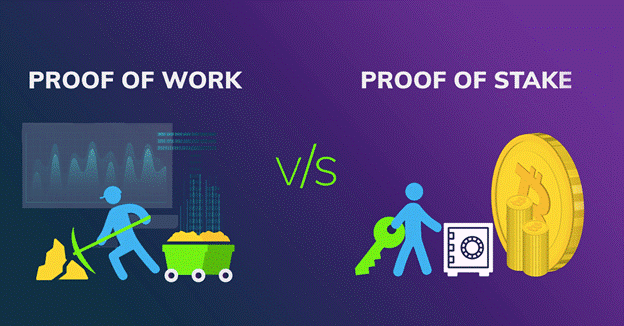
Staking generally refers to participating in a proof-of-stake blockchain’s consensus mechanism by committing or delegating crypto assets according to that network’s rules.
DeFi is a broader category covering financial applications such as decentralized trading, lending, borrowing, liquidity provision, and derivatives.
However, staking and DeFi can overlap.
For example, a DeFi application may use liquid staking tokens as collateral or integrate staking-related assets into other financial strategies.
This illustrates DeFi’s composability but also increases complexity.
Internal linking opportunity: Link “what is crypto staking and how does it generate passive income?” to your existing staking guide.
DeFi and Cryptocurrency: What Is the Difference?
Cryptocurrency refers broadly to digital assets that use blockchain or distributed-ledger technology.
DeFi refers to financial applications and protocols built using blockchain-based technology.
Therefore:
Bitcoin is a cryptocurrency.
ETH is a cryptocurrency/native blockchain asset.
A decentralized exchange is a DeFi application.
A lending protocol is a DeFi application.
A stablecoin can be a crypto asset used extensively within DeFi.
The categories overlap, but they are not interchangeable.
What Is the Future of DeFi?
The future of DeFi will likely depend on several technical and economic developments.
Scalability remains important because financial applications need to process transactions efficiently.
Security is equally important. DeFi protocols control substantial amounts of value, making smart-contract vulnerabilities attractive targets.
Interoperability also matters because users and assets increasingly operate across multiple blockchain networks.
Regulation is another major factor.
Global regulators are examining how existing investor-protection, market-integrity, financial-stability, and anti-illicit-finance frameworks apply to decentralized systems. IOSCO’s DeFi recommendations illustrate the direction of international regulatory thinking, while BIS research continues to examine DeFi’s financial-stability implications.
There is also a question about real-world utility.
BIS research has observed that much DeFi activity has historically been concentrated within the crypto ecosystem itself, including trading, lending, and arbitrage, rather than serving the broader real economy.
Future growth may therefore depend not only on higher crypto trading volumes but also on whether blockchain-based financial infrastructure can provide useful, sustainable services beyond speculative activity.
DeFi: Key Terms Beginners Should Know
Understanding the terminology makes DeFi much easier to navigate.
Smart contract: Blockchain-based software that executes predefined rules.
Protocol: A collection of rules and smart contracts designed to provide a specific function.
DEX: Decentralized exchange used for blockchain-based asset trading.
AMM: Automated market maker, a mechanism commonly used by DEXs to facilitate trades through liquidity pools.
Liquidity pool: Smart-contract-controlled pool of assets used to facilitate financial activity.
Liquidity provider: A user who supplies assets to a liquidity pool.
TVL: Total value locked in a protocol’s smart contracts.
APY: Annual percentage yield that generally incorporates compounding assumptions.
APR: Annual percentage rate that generally does not include compounding.
Impermanent loss: A potential loss experienced by liquidity providers due to changes in the relative prices of pooled assets.
Oracle: Infrastructure that supplies external information to smart contracts.
Gas: The computational resource used for transactions on networks such as Ethereum, with users paying associated transaction fees.
Governance token: A token that can provide voting rights or other governance functions in a protocol.
Bridge: Infrastructure used to transfer assets or representations of assets between blockchain networks.
Slippage: The difference between an expected transaction price and the actual execution price.
Liquidation: The forced closing or sale of collateral when a borrower’s position no longer meets protocol requirements.
DeFi Beginner Checklist
Before using any DeFi application, take time to understand the transaction rather than relying solely on a yield number or social-media recommendation.
Check the exact protocol and official contract addresses.
Understand what asset you are depositing.
Find out whether you are lending, borrowing, trading, staking, or providing liquidity.
Identify the source of the advertised yield.
Review smart-contract audits and understand that an audit is not a guarantee.
Check whether contracts are upgradeable and who controls upgrades.
Understand liquidation conditions if borrowing.
Check liquidity and potential slippage.
Review token approval requirements.
Keep wallet security and private-key protection as a priority.
Consider network fees.
Understand the tax and regulatory rules that may apply in your jurisdiction.
Never assume that a protocol is safe simply because it is popular, has high TVL, or describes itself as decentralized.
Final Takeaway
DeFi is best understood as programmable financial infrastructure built largely around blockchain networks, crypto assets, smart contracts, and decentralized applications.
It can provide functions that resemble trading, lending, borrowing, payments, liquidity provision, and other financial activities without requiring a traditional intermediary to execute every step.
Its most important technical characteristics include smart-contract automation, non-custodial interaction in many applications, transparency of blockchain transactions, permissionless access in some contexts, and composability between protocols.
But decentralization does not eliminate financial risk.
DeFi users can face cryptocurrency volatility, smart-contract vulnerabilities, oracle failures, bridge risks, liquidity problems, liquidation, impermanent loss, governance concentration, regulatory uncertainty, scams, and irreversible transaction mistakes.
The most useful way to evaluate DeFi is therefore not to ask whether it is “good” or “bad,” or whether a particular yield is attractive simply because it is high.
Instead, understand the mechanism.
Know what the protocol does.
Know where the yield comes from.
Know who controls upgrades.
Know what can cause a loss.
Know what you are signing.
And understand the rules that apply to you.
That approach turns DeFi from a collection of confusing crypto terminology into something that can be analyzed using understandable financial, technical, and risk-management principles.
Frequently Asked Questions About DeFi
What does DeFi stand for?
DeFi stands for decentralized finance. It generally refers to blockchain-based financial products, services, protocols, and applications designed to provide financial functions through smart contracts and other distributed-ledger technologies.
What is DeFi in simple terms?
DeFi is a way of providing certain financial services using blockchain networks and software rather than relying entirely on traditional financial intermediaries. Users can interact with smart contracts to trade, lend, borrow, provide liquidity, and perform other financial activities.
How does DeFi make money?
DeFi protocols can generate economic activity through trading fees, lending interest, borrowing fees, liquidation fees, and other charges. Users may receive returns through fee sharing, interest, incentives, staking mechanisms, or changes in asset prices. Returns are not guaranteed.
Is DeFi the same as cryptocurrency?
No. Cryptocurrency refers to digital assets such as BTC or ETH, while DeFi refers to financial applications and protocols that use blockchain technology. Cryptocurrencies are often used as assets within DeFi applications.
Is DeFi the same as a decentralized exchange?
No. A decentralized exchange is one type of DeFi application. DeFi also includes lending protocols, borrowing markets, stablecoin systems, derivatives, asset-management applications, and other financial protocols.
Can you lose money in DeFi?
Yes. Users can lose money because of cryptocurrency price declines, smart-contract exploits, liquidation, liquidity problems, impermanent loss, oracle failures, bridge failures, governance decisions, scams, transaction mistakes, or other technical and market risks.
Is DeFi regulated?
Regulation depends on the jurisdiction and the specific activity. There is no single global DeFi regulatory framework. IOSCO has emphasized that some DeFi arrangements can perform functions similar to traditional financial intermediaries and may therefore raise investor-protection and market-regulation issues.
What is TVL in DeFi?
TVL means total value locked. It generally measures the value of assets held in a protocol’s smart contracts. It is widely used to estimate the size of DeFi protocols but should not be treated as a measure of revenue, profitability, safety, or user count.
What is a DeFi liquidity pool?
A liquidity pool is a collection of assets deposited into smart contracts so users can trade or interact with a DeFi protocol. People who provide liquidity may receive fees or other incentives, but they can also face price risk and impermanent loss.
What is impermanent loss in DeFi?
Impermanent loss is the difference that can arise between the value of assets supplied to a liquidity pool and the value those assets might have had if they had simply been held outside the pool, particularly when the relative prices of the assets change.
Is DeFi safer than traditional finance?
It is not accurate to make a blanket statement that DeFi is safer. DeFi replaces or reduces certain intermediaries but introduces technology, smart-contract, governance, oracle, liquidity, and infrastructure risks. Traditional finance has different risks and also provides institutional and regulatory protections that may not exist in the same form in DeFi.
Do I need a crypto wallet to use DeFi?
Many self-custodial DeFi applications require a compatible crypto wallet to sign blockchain transactions. Some services that use DeFi infrastructure may provide a different interface or custody arrangement, so the exact requirements depend on the application.
Can beginners use DeFi?
Beginners can learn about and interact with DeFi, but they should understand the risks before committing funds. DeFi transactions can be technically complex and may be irreversible. Starting with education and learning how wallets, smart contracts, gas fees, token approvals, and liquidity work is important.
If you want to contribute your piece of content on Crypto, Bitcoins and other digital currencies for Bitsoz, You can search for us in Google with queries like “write for us crypto”. “Write for us bitcoins” or directly contact us and let us know what you want.