

Introduction
One of the most fascinating aspects of Bitcoin is not just how it works, but who created it. More than a decade after Bitcoin’s launch, the identity of its creator remains unknown. This mystery has sparked endless debate, research, and speculation across the world.Understanding who created Bitcoin and the story behind Satoshi Nakamoto helps explain why Bitcoin was designed the way it is and why decentralization sits at the core of its philosophy.
- Introduction
- The Birth of Bitcoin
- Who Is Satoshi Nakamoto?
- The Bitcoin Whitepaper
- Satoshi Nakamoto’s Early Involvement
- Why Satoshi Nakamoto Remained Anonymous
- One of the most asked questions is why Satoshi chose anonymity. There are several strong reasons.
- Satoshi Nakamoto’s Bitcoin Holdings
- Disappearance of Satoshi Nakamoto
- Theories About Satoshi Nakamoto’s Identity
- Why Satoshi Nakamoto’s Identity Still Matters
- Satoshi Nakamoto’s Legacy
- Common Myths About Satoshi Nakamoto
- Conclusion
- Frequently Asked Questions:
The Birth of Bitcoin
Bitcoin appeared in 2008, a time when trust in traditional financial institutions was deeply shaken. Banks were failing, governments were bailing them out, and everyday people were paying the price.
Against this backdrop, a new idea emerged. A system of money that did not rely on banks, governments, or centralized authorities. Bitcoin was introduced as a solution to long-standing problems in the global financial system, such as excessive control, lack of transparency, and inflation.
This timing was not accidental. Bitcoin was a direct response to the weaknesses of centralized finance.
Who Is Satoshi Nakamoto?
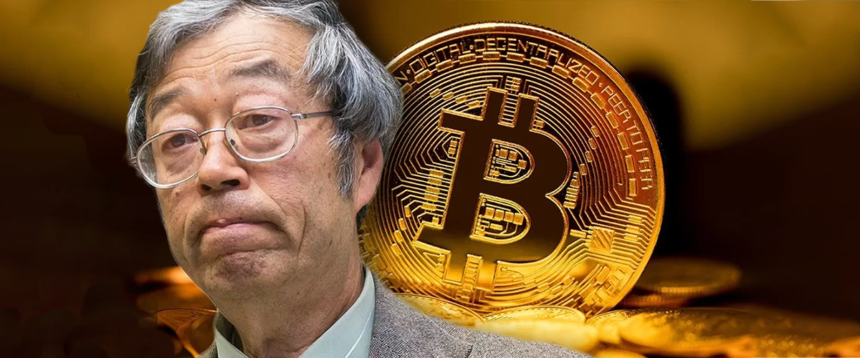
Satoshi Nakamoto is the name used by the creator of Bitcoin. Whether this refers to one person or a group of people is still unknown. No verified personal information, photographs, or confirmed identities exist.
What we do know is that Satoshi was highly skilled in cryptography, economics, and computer science. The writing style in emails and forum posts suggests a deep understanding of financial systems and privacy-focused technology.
The name itself may be a pseudonym, chosen to keep attention on Bitcoin rather than on its creator.
The Bitcoin Whitepaper
In October 2008, Satoshi Nakamoto published a document titled Bitcoin: A Peer-to-Peer Electronic Cash System. This paper laid the foundation for everything Bitcoin represents today.
The Bitcoin whitepaper explained how a decentralized network could securely process transactions without trusting third parties. It introduced key ideas such as blockchain technology, Proof of Work, and digital scarcity.
What made the whitepaper remarkable was its simplicity. In just nine pages, Satoshi solved a problem that had challenged cryptographers for decades: double spending in digital money.
Satoshi Nakamoto’s Early Involvement
Satoshi did not simply release the idea and disappear. After launching the Bitcoin network in January 2009, Satoshi actively participated in its development.
They:
- Mined the first Bitcoin blocks
- Fixed bugs in the software
- Communicated with early developers
- Explained design decisions on forums
During this period, Bitcoin had no monetary value. It was an experiment driven by belief rather than profit.
Why Satoshi Nakamoto Remained Anonymous
One of the most asked questions is why Satoshi chose anonymity. There are several strong reasons.
First, anonymity protects Bitcoin’s decentralized nature. If a known individual were tied to Bitcoin, governments or institutions could pressure, influence, or target them.
Second, Bitcoin challenges traditional monetary systems. Remaining anonymous reduced legal and political risks.
Finally, anonymity ensured that Bitcoin would stand on its own. There would be no leader, no central authority, and no single point of failure.
One of the most asked questions is why Satoshi chose anonymity. There are several strong reasons.
First, anonymity protects Bitcoin’s decentralized nature. If a known individual were tied to Bitcoin, governments or institutions could pressure, influence, or target them.
Second, Bitcoin challenges traditional monetary systems. Remaining anonymous reduced legal and political risks.
Finally, anonymity ensured that Bitcoin would stand on its own. There would be no leader, no central authority, and no single point of failure.
Satoshi Nakamoto’s Bitcoin Holdings
Blockchain analysis suggests that Satoshi Nakamoto mined approximately one million Bitcoin in the early days. These coins have never been spent.
This is important for two reasons. First, it shows that Satoshi was not motivated by personal profit. Second, untouched coins reinforce trust in Bitcoin’s neutrality.
If these coins were ever moved, it would likely cause major market reactions, which is why their inactivity continues to matter.
Disappearance of Satoshi Nakamoto
In 2010, Satoshi gradually reduced public involvement. By 2011, all known communication stopped.
Before disappearing, Satoshi handed over control of the Bitcoin code repository to other developers. This was a crucial step toward true decentralization.
Since then, Bitcoin has continued to grow without its creator, proving that the system does not depend on any individual.
Theories About Satoshi Nakamoto’s Identity
Over the years, many individuals have been speculated as Satoshi Nakamoto. These include cryptographers, developers, and entrepreneurs.
Some believe Satoshi was a group rather than a single person, citing the breadth of expertise shown in Bitcoin’s design.
Despite extensive investigations, no theory has been proven. The mystery remains intact.
Why Satoshi Nakamoto’s Identity Still Matters
The unknown identity of Bitcoin’s creator reinforces trust in the system. There is no founder influence, no leadership control, and no central authority.
If Satoshi were revealed today, it could raise concerns about influence or ownership. The absence of identity strengthens Bitcoin’s independence.
This is one of the reasons Bitcoin is often described as truly decentralized.
Satoshi Nakamoto’s Legacy
Regardless of identity, Satoshi Nakamoto’s impact is undeniable. Bitcoin introduced the world to decentralized digital currency, trustless systems, and financial sovereignty.
Bitcoin also inspired thousands of other cryptocurrencies and reshaped discussions around money, privacy, and control.
Satoshi’s greatest achievement may not be Bitcoin itself, but the idea that money can exist without permission.
Common Myths About Satoshi Nakamoto
One common myth is that Satoshi still controls Bitcoin. In reality, Bitcoin is governed by consensus among its users.
Another myth is that Bitcoin was created by governments or intelligence agencies. There is no credible evidence to support this claim.
Most myths arise from misunderstanding how decentralized systems function.
Conclusion
So, who created Bitcoin? The story behind Satoshi Nakamoto is one of intention, philosophy, and restraint. By remaining anonymous, Satoshi allowed Bitcoin to grow without bias, control, or leadership.
The mystery is not a weakness. It is one of Bitcoin’s greatest strengths. Bitcoin does not belong to Satoshi Nakamoto. It belongs to everyone who uses it.
Frequently Asked Questions:
Who created Bitcoin?
Bitcoin was created by an anonymous person or group using the name Satoshi Nakamoto. The real identity has never been confirmed, and no verified personal details are publicly known.
Is Satoshi Nakamoto a real person?
It is unknown whether Satoshi Nakamoto is a single individual or a group of people. The name is widely believed to be a pseudonym used to protect anonymity.
Why did Satoshi Nakamoto create Bitcoin?
Satoshi Nakamoto created Bitcoin to offer a decentralized financial system that does not rely on banks or governments. The goal was to enable peer-to-peer digital payments without trusted intermediaries.
When was Bitcoin created?
Bitcoin was introduced in 2008 with the release of the Bitcoin whitepaper. The Bitcoin network officially launched in January 2009.
What is the Bitcoin whitepaper?
The Bitcoin whitepaper is a technical document written by Satoshi Nakamoto titled Bitcoin: A Peer-to-Peer Electronic Cash System. It explains how Bitcoin works and how blockchain technology prevents double spending.
Why did Satoshi Nakamoto remain anonymous?
Satoshi Nakamoto likely remained anonymous to protect personal safety, avoid legal or political pressure, and ensure Bitcoin stayed decentralized without a central leader.
How much Bitcoin does Satoshi Nakamoto own?
Blockchain data suggests Satoshi Nakamoto mined around one million Bitcoin in the early days. These coins have never been moved or spent.
What happened to Satoshi Nakamoto?
Satoshi Nakamoto gradually withdrew from public communication between 2010 and 2011. Since then, there has been no confirmed contact or activity.
Has anyone proven they are Satoshi Nakamoto?
No one has successfully proven they are Satoshi Nakamoto. Several claims have been made over the years, but none have provided cryptographic proof.
Does Satoshi Nakamoto still control Bitcoin?
No, Satoshi Nakamoto does not control Bitcoin. The network is decentralized and maintained by thousands of participants worldwide through consensus.