
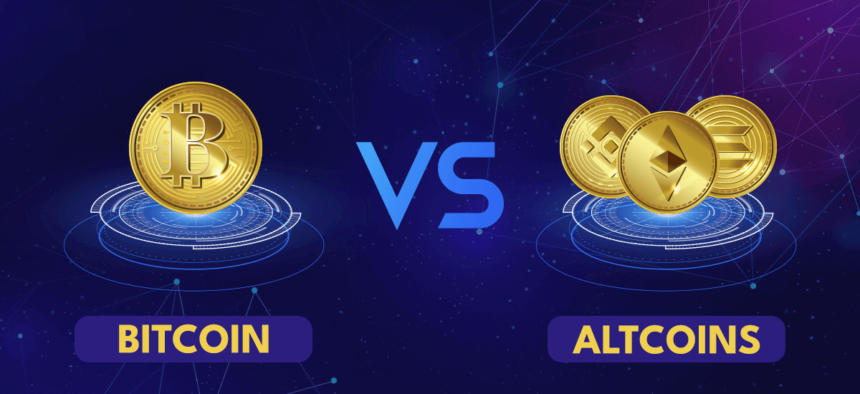
Cryptocurrency is no longer a fringe concept. It has become a global financial reality, and when people talk about crypto, two terms always come up: Bitcoin and altcoins.
- What Is Bitcoin?
- What Are Altcoins?
- Core Differences Between Bitcoin and Altcoins
- 1. Purpose and Vision
- 2. Market Value and Dominance
- 3. Technology and Speed
- 4. Supply and Inflation
- 5. Security and Network Strength
- Why Bitcoin Is Considered the “Original” Cryptocurrency
- Why Altcoins Exist: What Problems They Solve
- 1. Faster Transactions
- 2. Smart Contracts and Decentralized Apps
- 3. Privacy and Anonymity
- 4. Stable Value for Payments
- 5. Decentralized Finance (DeFi)
- Bitcoin vs Altcoins: Use Cases in the Real World
- Bitcoin vs Altcoins: Investment Strategy
- The Risk Factor: Why Altcoins Are Riskier
- Bitcoin vs Altcoins in USA, Europe, and Gulf States
- Bitcoin vs Altcoins: Which One Should You Choose?
- Conclusion
- What is the main difference between Bitcoin and altcoins?
- Are altcoins riskier than Bitcoin?
- Can altcoins replace Bitcoin?
- What are the best altcoins for beginners?
- Why is Bitcoin considered digital gold?
- Are altcoins better for trading?
- What is a smart contract?
- Are altcoins legal in the USA and Europe?
- What is market dominance in crypto?
- Should I invest in both Bitcoin and altcoins?
If you’re new to the crypto world, it’s easy to get confused. Why is Bitcoin always mentioned first? What makes altcoins different? And more importantly, which one should you choose for investment or long-term use?
This article will explain the key differences between Bitcoin and altcoins, how each one works, and what they mean for users in the USA, Europe, and Gulf states.
What Is Bitcoin?
Bitcoin is the first cryptocurrency, launched in 2009 by the mysterious Satoshi Nakamoto. It was created as a peer-to-peer digital cash system that allows people to transfer value without banks or intermediaries.
Bitcoin is the most recognized and widely adopted cryptocurrency in the world. Many investors call it digital gold because it is seen as a long-term store of value.
Key Features of Bitcoin
- Decentralized network
- Limited supply (21 million BTC)
- Secure and transparent blockchain
- High liquidity and global adoption
- Strong brand trust and recognition
Bitcoin’s primary purpose is to act as a store of value and a medium of exchange, although today it is mainly used as digital gold.
What Are Altcoins?
Altcoins are any cryptocurrencies other than Bitcoin. The term “altcoin” stands for “alternative coin.”
Altcoins were created to address limitations in Bitcoin or to introduce new features. They can serve a wide range of purposes, from faster transactions to decentralized finance and smart contracts.
Types of Altcoins
Altcoins can be divided into several categories:
- Payment coins (Litecoin, Bitcoin Cash)
- Smart contract platforms (Ethereum, Solana, Cardano)
- Stablecoins (USDT, USDC, BUSD)
- Privacy coins (Monero, Zcash)
- DeFi tokens (Uniswap, Aave, Compound)
- Governance tokens (MakerDAO, Curve)
Each category solves different problems and targets different use cases.
Core Differences Between Bitcoin and Altcoins
1. Purpose and Vision
Bitcoin was created as a digital alternative to gold, focusing on scarcity, security, and decentralization.
Altcoins are designed for specific use cases like smart contracts, privacy, scalability, and DeFi.
2. Market Value and Dominance
Bitcoin has the highest market capitalization and dominates the crypto market.
Altcoins have smaller market caps, but some of them have grown into major cryptocurrencies with large ecosystems.
3. Technology and Speed
Bitcoin focuses on security and decentralization, which sometimes limits transaction speed.
Altcoins often prioritize speed, scalability, and new features like smart contracts and faster confirmations.
4. Supply and Inflation
Bitcoin has a fixed supply of 21 million coins, making it a deflationary asset.
Altcoins may have different supply models, including inflationary or capped supply.
5. Security and Network Strength
Bitcoin has the strongest network security due to its massive mining power and global adoption.
Some altcoins may be less secure, especially smaller projects with lower network activity.
Why Bitcoin Is Considered the “Original” Cryptocurrency
Bitcoin is not just a cryptocurrency — it is the foundation of the entire crypto market. It was the first to introduce the concept of a decentralized digital currency and proved that a blockchain can work at scale.
Bitcoin’s biggest advantage is trust. It has been operating for more than a decade without major security failures.
Why Bitcoin is Seen as Digital Gold
Bitcoin’s limited supply and growing demand make it a popular hedge against inflation. Many investors view it as a safe store of value, similar to gold.
This is why Bitcoin is often the first choice for long-term investors.
Why Altcoins Exist: What Problems They Solve
Bitcoin was revolutionary, but it has limitations. Altcoins were created to improve or expand what Bitcoin offers.
Here are some reasons altcoins exist:
1. Faster Transactions
Bitcoin can be slow during peak times. Altcoins like Litecoin and Solana offer faster transaction speeds and lower fees.
2. Smart Contracts and Decentralized Apps
Bitcoin does not support complex smart contracts. Platforms like Ethereum and Cardano allow developers to build decentralized applications (dApps).
3. Privacy and Anonymity
Bitcoin transactions are transparent. Privacy coins like Monero and Zcash focus on anonymity.
4. Stable Value for Payments
Bitcoin is volatile, making it difficult for everyday payments. Stablecoins like USDT and USDC offer stable value pegged to USD.
5. Decentralized Finance (DeFi)
DeFi applications allow users to lend, borrow, and trade without banks. Altcoins power these platforms, making financial services more accessible.
Bitcoin vs Altcoins: Use Cases in the Real World
Bitcoin Use Cases
- Store of value
- International payments
- Institutional investment
- Hedge against inflation
- Digital gold
Altcoin Use Cases
- Decentralized finance (DeFi)
- Smart contracts
- NFTs and gaming
- Fast and low-cost transactions
- Tokenization of real assets
Both Bitcoin and altcoins have real-world uses, but they serve different roles.
Bitcoin vs Altcoins: Investment Strategy
If you are building a crypto portfolio, here are common strategies:
1. Core-Satellite Strategy
- Bitcoin as the core investment
- Altcoins as growth satellites
2. Diversification
- Spread investment across multiple coins
- Reduce risk from any single project
3. Long-Term vs Short-Term
- Bitcoin for long-term stability
- Altcoins for high growth potential (but higher risk)
The Risk Factor: Why Altcoins Are Riskier
Altcoins can offer high rewards, but they come with higher risk:
1. Volatility
Altcoins can move 10% to 50% in a single day.
2. Security Risks
Smaller networks can be vulnerable to attacks.
3. Regulatory Risk
Regulations in the USA, Europe, and Gulf states can impact altcoin markets.
4. Project Failure
Many altcoin projects fail due to weak development or lack of adoption.
Bitcoin vs Altcoins in USA, Europe, and Gulf States
USA
The USA has high crypto adoption and institutional investment.
Bitcoin is widely accepted, while altcoins face regulatory scrutiny and varying state laws.
Europe
Europe supports crypto innovation and is moving toward clear regulations.
The EU’s MiCA framework aims to protect investors and support crypto growth.
Gulf States
Gulf countries like UAE and Saudi Arabia are actively adopting blockchain technology.
Crypto adoption is growing fast, with strong government support for digital finance and innovation.
Bitcoin vs Altcoins: Which One Should You Choose?
The answer depends on your goals.
Choose Bitcoin if you want:
- Long-term stability
- A proven store of value
- Lower risk compared to altcoins
- High liquidity
Choose Altcoins if you want:
- High growth potential
- Access to new technology and innovation
- Faster transactions and DeFi services
- Specific use cases like NFTs or smart contracts
Conclusion
Bitcoin vs altcoins is not a competition. It’s a relationship.
Bitcoin is the foundation and the most trusted digital asset. Altcoins bring innovation, speed, and new use cases.
For most people, Bitcoin is the safest starting point.
If you want higher growth and innovation, altcoins offer exciting opportunities — but with higher risk.
Both Bitcoin and altcoins are shaping the future of global finance. Understanding the difference between them is essential for anyone who wants to navigate the world of cryptocurrency.
FAQs (Bitcoin vs Altcoins)
What is the main difference between Bitcoin and altcoins?
Bitcoin is the original cryptocurrency focused on store of value, while altcoins are alternative cryptocurrencies built for different purposes like smart contracts, privacy, or faster payments.
Are altcoins riskier than Bitcoin?
Yes, altcoins are generally riskier due to smaller market size, lower liquidity, and higher volatility.
Can altcoins replace Bitcoin?
Altcoins can compete in certain areas, but Bitcoin remains the most trusted and widely adopted digital asset.
What are the best altcoins for beginners?
For beginners, stablecoins and major smart contract platforms like Ethereum and Solana are more reliable.
Why is Bitcoin considered digital gold?
Because Bitcoin has limited supply and is used as a store of value and hedge against inflation.
Are altcoins better for trading?
Many traders prefer altcoins for higher volatility and faster price movements, but this comes with higher risk.
What is a smart contract?
A smart contract is a self-executing agreement stored on a blockchain that automatically runs when conditions are met.
Are altcoins legal in the USA and Europe?
Most altcoins are legal, but regulations vary by country and the type of cryptocurrency.
What is market dominance in crypto?
Market dominance refers to Bitcoin’s share of the total cryptocurrency market value.
Should I invest in both Bitcoin and altcoins?
Yes, many investors use Bitcoin for stability and altcoins for growth, using a diversified portfolio approach.