
Ethereum is one of the most widely used blockchain platforms for decentralised applications, digital assets and smart contracts. Its main network provides the infrastructure for transferring ETH, executing smart contracts, validating transactions and maintaining a shared blockchain state. However, as more people and applications use Ethereum, competition for transaction space can increase fees and make some activities expensive.
- What Is Ethereum Layer 1?
- What Is Ethereum Layer 2?
- Ethereum Layer 1 vs Layer 2: Key Differences
- 1. Transaction Processing
- 2. Transaction Fees
- 3. Security and Decentralisation
- 4. Transaction Speed and Finality
- 5. Data Availability
- Types of Ethereum Layer 2 Solutions
- Examples of Ethereum Layer 2 Networks
- Advantages of Ethereum Layer 1
- Native Ethereum Settlement
- Established Security Infrastructure
- Direct Access to Ethereum Applications and Assets
- Advantages of Ethereum Layer 2
- Lower Transaction Costs
- Increased Application Capacity
- More Flexible Application Environments
- Ethereum-Compatible Development
- Limitations and Risks of Layer 1 and Layer 2
- Ethereum Mainnet Congestion and Fees
- Layer 2 Sequencer Risk
- Bridge and Smart Contract Risk
- Withdrawal Delays
- Upgrade and Governance Risks
- When Should You Use Ethereum Layer 1 or Layer 2?
- Use Ethereum Layer 1 When Direct Mainnet Settlement Is Important
- Use Layer 2 When Lower-Cost Frequent Activity Matters
- Use a Hybrid Approach When Both Layers Are Needed
- How to Choose an Ethereum Layer 2 Network for Development
- The Future of Ethereum Layer 1 and Layer 2
- Conclusion
- Frequently Asked Questions
- 1. What is the main difference between Ethereum Layer 1 and Layer 2?
- 2. Is Ethereum Mainnet a Layer 1?
- 3. Why are Ethereum Layer 2 transactions usually cheaper?
- 4. Is Layer 2 as secure as Ethereum Layer 1?
- 5. What are examples of Ethereum Layer 2 networks?
- 6. What is the difference between an optimistic rollup and a ZK-rollup?
- 7. Does Layer 2 use ETH?
- 8. Can I move ETH from Layer 1 to Layer 2?
- 9. Why can withdrawing from an optimistic rollup take several days?
- 10. Is a sidechain the same as Layer 2?
- 11. Should developers build on Ethereum Layer 1 or Layer 2?
- 12. Can Ethereum Layer 1 and Layer 2 work together?
Layer 2 networks help address this challenge. They process transactions in a separate execution environment and use Ethereum for important settlement, verification or data-availability functions, depending on their architecture. This allows many applications to offer lower transaction costs and a more responsive experience without requiring every operation to execute directly on Ethereum Mainnet.
The distinction between Layer 1 and Layer 2 is important because these networks do not have identical responsibilities or security assumptions. Ethereum Mainnet is the base settlement and consensus network. A Layer 2 network adds another processing environment, but its security depends on how it connects to Ethereum, how transaction data is made available, how state transitions are verified and who controls important system components.
This guide explains Ethereum Layer 1 vs Layer 2, how both layers work, the different types of Layer 2 solutions, their advantages and limitations, and how businesses and developers can choose an appropriate network.
What Is Ethereum Layer 1?
Ethereum Layer 1, commonly called Ethereum Mainnet or L1, is the base blockchain on which the Ethereum ecosystem operates. It maintains the canonical blockchain history, processes transactions, executes smart contracts and uses its proof-of-stake consensus mechanism to agree on the network’s state.
When someone sends ETH directly on Ethereum Mainnet, the transaction is broadcast to the network, included in a block and executed by Ethereum’s execution layer. Validators participate in the proof-of-stake consensus process, helping the network agree on which blocks belong to the canonical chain.
Ethereum is not simply a payment network. Its execution environment, the Ethereum Virtual Machine (EVM), allows developers to deploy smart contracts that manage tokens, lending protocols, decentralised exchanges, digital collectibles and other applications.
How Ethereum Layer 1 Works
Ethereum’s operation involves several connected processes.
First, a user creates and signs a transaction using a wallet. The transaction may transfer ETH, call a smart contract or interact with a decentralised application.
The transaction is broadcast to the Ethereum network, where it can be received by nodes and included in a proposed block. A validator selected for a particular slot proposes a block, and other validators participate in the consensus process.
Ethereum’s proof-of-stake system organises time into slots and epochs. One slot lasts 12 seconds, and one epoch contains 32 slots. A validator is selected to propose a block in each slot, although not every slot necessarily contains a successfully proposed block.
Once a block is included, nodes execute its transactions and check that the resulting state follows Ethereum’s protocol rules. Validators also attest to blocks and checkpoints. Finality is reached through Ethereum’s checkpoint voting process when the required stake supports the relevant checkpoints.
A 12-second slot should not be confused with finality. A transaction may be included in a block before it becomes finalised. Ethereum’s proof-of-stake finality process requires two consecutive checkpoint voting rounds, with a theoretical minimum of approximately 12.8 minutes under the standard 32-slot epoch structure. Actual timing can vary.
Main Responsibilities of Ethereum Layer 1
Ethereum Mainnet performs several functions that are essential to the broader ecosystem.
Its consensus mechanism coordinates the network without requiring a central company to decide which transactions are valid. Its execution layer processes transactions and smart contracts. Its settlement infrastructure provides a common reference point for assets and applications that depend on Ethereum.
Ethereum also provides data availability for rollups that publish their required transaction data to Mainnet. This matters because independent participants need access to transaction information to reconstruct and verify a rollup’s state.
These functions make Ethereum Layer 1 the foundation of many Layer 2 systems. However, a Layer 2 network does not automatically inherit every Ethereum security property merely because it uses ETH or supports Ethereum-compatible smart contracts. The actual relationship depends on its architecture.
What Is Ethereum Layer 2?
Ethereum Layer 2 refers to a category of scaling solutions built on top of Ethereum. These systems process transactions in a separate environment to reduce the execution workload placed directly on Ethereum Mainnet.
A Layer 2 network typically allows users to perform activities such as sending tokens, swapping assets, interacting with smart contracts and using decentralised applications without executing every transaction directly on L1.
Many Ethereum Layer 2 networks use rollup technology. A rollup executes transactions outside Ethereum Mainnet, groups them into batches and publishes transaction data or other information to Ethereum. This allows the base network to verify or settle the rollup’s state according to its protocol.
The important point is that Layer 2 is not one single blockchain or one uniform technology. It includes different designs with different proof systems, data-availability arrangements, bridge mechanisms and operational controls.
How Layer 2 Works
Consider a user who wants to exchange tokens through a decentralised exchange.
On Ethereum Mainnet, the swap is executed directly by Ethereum’s execution environment. The user pays the required gas fee for the transaction, and the transaction competes for inclusion in an L1 block.
On a rollup-based Layer 2, the user submits the transaction to the L2 network. A sequencer commonly receives and orders transactions, after which the L2 execution environment processes them. The network then groups transactions into batches and publishes the required data or commitments to Ethereum.
Instead of requiring Ethereum to execute every individual L2 transaction, the rollup uses Ethereum for important settlement and verification functions. The cost of publishing a batch can be distributed across the transactions included in it.
The exact process depends on the rollup design. Optimistic rollups use a dispute mechanism for challenging invalid state claims, while zero-knowledge rollups use cryptographic validity proofs to demonstrate that state transitions follow the protocol rules.
What Is a Sequencer?
A sequencer is a component used by many Layer 2 networks to receive, order and include transactions.
It can provide a responsive user experience by processing transactions without requiring each one to wait for direct Ethereum Mainnet inclusion. However, sequencer design also creates operational and trust considerations.
If a sequencer becomes unavailable, users may experience delays. If it is controlled by a limited set of operators, censorship resistance and transaction ordering become important questions.
Some rollups provide alternative transaction-submission or forced-inclusion mechanisms that allow users to interact with the system when the sequencer does not cooperate. The availability, timing and practical effectiveness of these mechanisms differ by network.
Ethereum Layer 1 vs Layer 2: Key Differences
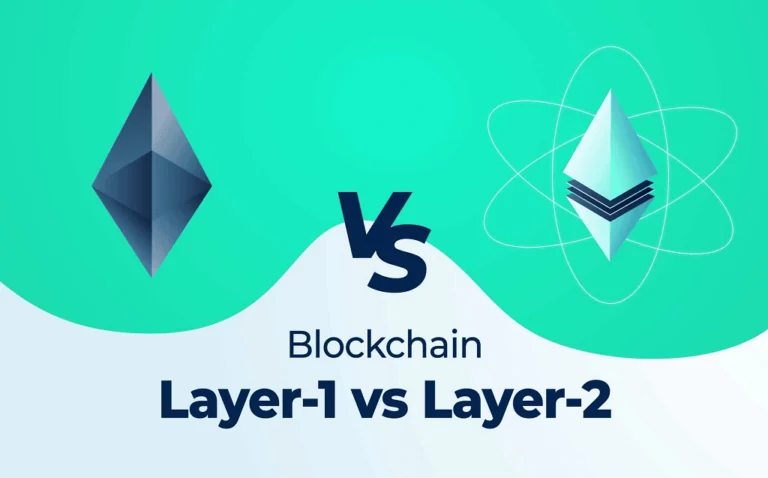
Ethereum Layer 1 and Layer 2 are connected, but they are not interchangeable. L1 provides the base consensus and settlement environment, while L2 systems provide additional transaction-processing capacity using different architectures.
The following table summarises the main distinctions.
| Comparison factor | Ethereum Layer 1 | Ethereum Layer 2 |
| Main role | Base blockchain and settlement layer | Additional transaction-processing layer |
| Transaction execution | Directly on Ethereum Mainnet | In a separate L2 execution environment |
| Consensus and validation | Ethereum proof of stake | Depends on the L2 design and its connection to Ethereum |
| Transaction fees | Paid according to Ethereum Mainnet gas conditions | Generally lower for rollup transactions, but variable |
| Transaction throughput | Limited by L1 block capacity and protocol parameters | Can increase capacity by processing transactions separately |
| Security model | Ethereum’s native consensus and execution rules | Depends on proof system, data availability, bridges and upgrade controls |
| Data availability | Ethereum maintains its own blockchain data | Rollups may publish data to Ethereum or use other arrangements |
| Withdrawal process | No L2-to-L1 withdrawal process | May require a bridge and additional proving or challenge time |
| Application compatibility | Native Ethereum environment | Varies; many L2s are EVM-compatible |
| Typical use | Base settlement, high-value transactions and direct smart contract execution | Lower-cost application activity and scaling |
1. Transaction Processing
The most fundamental difference is where transactions are executed.
On Ethereum Layer 1, transactions are processed directly by the Ethereum execution layer. Every transaction consumes block space and competes with other transactions for inclusion.
On a rollup-based Layer 2, execution takes place in a separate environment. The rollup processes many transactions and publishes the required information to Ethereum in batches.
This arrangement reduces the amount of individual execution work required on Mainnet. However, L2 transactions still depend on the network’s own infrastructure and the way it settles to Ethereum.
2. Transaction Fees
Ethereum Mainnet gas fees can rise when demand for block space increases. A transaction involving a complex smart contract can require substantially more gas than a basic ETH transfer.
Rollups can reduce user costs by combining transactions and sharing the cost of publishing data to Ethereum. Ethereum.org currently describes rollups as generally around five to twenty times cheaper than Mainnet, although actual savings vary with network activity, transaction complexity and fee conditions.
This is not a guaranteed fee ratio for every transaction. Some L2 activities can become more expensive during periods of congestion, and a complex operation may still cost more than a simple transfer.
Users should compare the current cost of the exact transaction they intend to make rather than relying on a fixed advertised fee.
3. Security and Decentralisation
Ethereum Mainnet uses its proof-of-stake consensus system to secure its own blockchain. Validators participate in block production and attestation, and the protocol uses economic penalties to discourage certain forms of misconduct.
Layer 2 security is more complicated. A rollup may use Ethereum for settlement and data availability, but it also relies on smart contracts, sequencers, proof systems, bridges and upgrade arrangements.
A rollup that publishes the data required for independent verification to Ethereum has a different security model from a chain that relies on an external data-availability committee.
Users should therefore evaluate a specific L2 rather than assuming that all networks labelled “Ethereum Layer 2” have identical security guarantees.
4. Transaction Speed and Finality
Layer 2 networks can provide fast transaction inclusion and a more responsive application experience. However, transaction inclusion, settlement and finality are different concepts.
A sequencer may confirm that a transaction has been processed on Layer 2, but that does not necessarily mean the transaction has reached the same finality status as a settled and finalised Ethereum Mainnet transaction.
For optimistic rollups, standard withdrawals to Ethereum can involve a challenge period. For validity-proof rollups, withdrawal timing depends on proof generation, verification and any additional protocol-specific delays.
Users should understand which stage of confirmation matters for their activity. A quick application confirmation may be sufficient for an ordinary interaction, while a large withdrawal or settlement operation may require stronger finality assurances.
5. Data Availability
Data availability refers to whether the information required to verify or reconstruct a blockchain’s state is accessible to the relevant participants.
Ethereum Mainnet maintains its own transaction data. Rollups must also make the information needed for their verification model available.
Some rollups publish transaction data to Ethereum using calldata or blob-carrying transactions. Other scaling designs use external data-availability arrangements, which introduce different trust assumptions.
Data availability is not the same as permanent archival storage. Ethereum’s blob mechanism provides a protocol-level availability period of approximately 18 days for blob data. Long-term historical access may depend on other infrastructure.
Types of Ethereum Layer 2 Solutions
Layer 2 includes different technologies. The two major rollup categories commonly discussed in Ethereum scaling are optimistic rollups and zero-knowledge rollups.
Understanding their verification models helps users and developers assess network behaviour and security assumptions.
Optimistic Rollups
Optimistic rollups execute transactions outside Ethereum Mainnet and publish transaction data and state commitments to Ethereum. They generally treat proposed state transitions as valid unless someone challenges them through the protocol’s dispute mechanism.
If a participant identifies an invalid state claim, they can initiate a challenge under the network’s rules. A fraud-proof or fault-proof process is used to resolve the disagreement.
This approach allows the rollup to avoid generating a cryptographic validity proof for every batch before it can be proposed. However, it introduces a challenge period for certain settlement and withdrawal operations.
Examples of optimistic rollup networks include Arbitrum One, Optimism and Base. Their individual implementations and dispute mechanisms differ.
Zero-Knowledge Rollups
Zero-knowledge rollups, often called ZK-rollups, execute transactions outside Ethereum Mainnet and submit cryptographic validity proofs to Ethereum.
The proof demonstrates that the proposed state transition follows the rules of the system. Ethereum verifies the proof through the relevant smart contract or verification mechanism.
This means the rollup does not rely on the same optimistic challenge assumption used by optimistic rollups. However, ZK-rollups still need appropriate data availability, secure proof systems, reliable software and safe upgrade arrangements.
Proof generation can also require substantial computational resources. The practical performance and cost depend on the rollup’s proving system and implementation.
Optimistic Rollups vs ZK-Rollups
The main difference is how the validity of state transitions is established.
Optimistic rollups rely on a dispute mechanism that allows invalid claims to be challenged. ZK-rollups rely on cryptographic validity proofs that are verified by Ethereum.
Neither category should be treated as automatically superior in every situation. Developers need to consider proof-system maturity, data availability, withdrawal design, application compatibility, infrastructure requirements and the decentralisation of critical components.
Examples of Ethereum Layer 2 Networks
Several networks use Ethereum Layer 2 technology, but they have different ecosystems and technical implementations.
Arbitrum
Arbitrum One is an optimistic rollup built around the Arbitrum Nitro architecture. It processes transactions outside Ethereum Mainnet and uses Ethereum for important settlement and data-availability functions.
Arbitrum uses the BoLD dispute protocol to support challenges to invalid state claims. Its documentation lists a challenge period of approximately 6.4 days for Arbitrum One, although network parameters can be changed through governance.
Arbitrum One is used by decentralised finance applications, trading protocols, lending services and other smart contract products.
It is important to distinguish Arbitrum One from Arbitrum Nova. Nova uses the AnyTrust model and relies on a Data Availability Committee, creating different data-availability assumptions.
Optimism
Optimism’s OP Mainnet is an Ethereum Layer 2 network built using the OP Stack. The OP Stack is an open-source framework for building Ethereum-compatible chains.
Optimism’s architecture includes a fault-proof system that allows participants to challenge invalid state claims. The wider ecosystem includes the Superchain concept, which aims to connect multiple OP Stack-based chains through shared technology and standards.
For developers, the OP Stack can be relevant when building an application-specific chain or selecting infrastructure within the broader Optimism ecosystem.
Base
Base is an Ethereum Layer 2 network built using the OP Stack. It is a separate network from OP Mainnet, even though both use the same broader technology framework.
Base supports Ethereum-compatible smart contracts and provides an environment for decentralised finance, consumer applications, payments and other onchain products.
Its use of the OP Stack does not mean that Base and Optimism have identical configurations, governance arrangements or operational risks. Each network should be evaluated independently.
Advantages of Ethereum Layer 1
Ethereum Mainnet remains essential because it provides the underlying consensus and settlement infrastructure used by the broader Ethereum ecosystem.
Native Ethereum Settlement
Transactions executed directly on Ethereum Mainnet are processed under Ethereum’s own consensus and execution rules. Users do not need to rely on an L2 sequencer or an L2-to-L1 bridge to complete a native Mainnet transaction.
This can be important for applications that require direct interaction with Ethereum’s base settlement environment.
Established Security Infrastructure
Ethereum’s proof-of-stake consensus mechanism is supported by a distributed validator network. The protocol uses economic penalties and checkpoint finality to make attacks on finalised history costly.
Ethereum’s documentation specifies a 32 ETH deposit requirement for an individual validator operating through the standard deposit process. This is a protocol requirement for that validator setup, not a statement that every ETH holder must operate a validator.
Direct Access to Ethereum Applications and Assets
Ethereum Mainnet remains an important environment for smart contracts, decentralised finance, token issuance and settlement.
Some applications and assets may be available only on Mainnet or may have deeper liquidity there than on particular Layer 2 networks. Users should check the actual contract addresses, liquidity and application support before selecting a network.
Advantages of Ethereum Layer 2
Layer 2 networks provide additional capacity and can make many Ethereum-based applications more affordable to use.
Lower Transaction Costs
Rollups can reduce the cost per transaction by processing many operations outside Mainnet and sharing the cost of publishing batch data.
This can make frequent activities more practical, including token swaps, gaming interactions, NFT transactions and smaller payments.
Increased Application Capacity
Layer 2 networks can support activity that would otherwise compete for Ethereum Mainnet block space.
This can help decentralised applications serve more users and support workflows that require frequent transactions.
More Flexible Application Environments
Some Layer 2 frameworks allow organisations to launch customised chains or configure their own execution environments.
This can be useful for businesses that need particular transaction policies, application-specific infrastructure or dedicated blockchain environments. However, a customized chain may introduce additional operational and security responsibilities.
Ethereum-Compatible Development
Many Layer 2 networks support the EVM or provide compatibility with Ethereum development tools. Developers can often reuse Solidity contracts, wallets and testing frameworks.
Compatibility can reduce migration effort, but it does not remove the need to test network-specific integrations, bridges, oracles and transaction behaviour.
Limitations and Risks of Layer 1 and Layer 2
Neither layer is risk-free. The risks differ because the networks have different responsibilities and architectures.
Ethereum Mainnet Congestion and Fees
Ethereum Mainnet has finite block space. When demand increases, users compete for inclusion and gas fees can rise.
This can make smaller transactions less economical and create cost uncertainty for applications with frequent onchain activity.
Layer 2 Sequencer Risk
A centralised or limited sequencer arrangement can create operational and censorship risks.
If the sequencer becomes unavailable, transactions may be delayed. If users cannot access a practical alternative submission route, they may have difficulty interacting with the network until service is restored.
Bridge and Smart Contract Risk
Moving assets between Ethereum and Layer 2 generally involves bridge contracts or other cross-chain infrastructure.
A bridge can be vulnerable to software bugs, compromised permissions, faulty message verification or operational failures. Third-party bridges may also depend on liquidity providers or additional validation systems.
Users should verify official bridge addresses and understand the risks before transferring significant funds.
Withdrawal Delays
Optimistic rollups commonly require a challenge period before standard withdrawals to Ethereum can be finalised.
For example, Arbitrum One documentation lists a 6.4-day challenge period. Other rollups use their own parameters and processes.
This delay does not mean that every transaction on an optimistic rollup takes several days. It applies to the relevant settlement and withdrawal process.
Some third-party bridges provide faster transfers, but they may introduce additional fees and trust assumptions.
Upgrade and Governance Risks
Layer 2 systems may have upgrade keys, security councils, emergency controls or other privileged roles.
These mechanisms can help developers respond to bugs and security incidents. However, they also create trust assumptions about who can change the system and under what conditions.
A serious evaluation should examine upgrade permissions, timelocks, emergency powers and the process for communicating protocol changes.
When Should You Use Ethereum Layer 1 or Layer 2?
The right network depends on the transaction, application and security requirements.
Use Ethereum Layer 1 When Direct Mainnet Settlement Is Important
Ethereum Mainnet may be appropriate when an application requires direct interaction with its base settlement environment, when the required contract or liquidity is available only on L1, or when the user prefers not to depend on a particular L2 bridge or sequencer.
High-value operations may also justify the cost of direct Mainnet execution when the application’s risk model requires it. This is not a universal rule: the appropriate choice depends on the actual application and its security requirements.
Use Layer 2 When Lower-Cost Frequent Activity Matters
Layer 2 may be suitable for applications that need frequent transactions, such as decentralised exchanges, gaming, social applications and smaller payments.
It can also be attractive for developers who want Ethereum-compatible infrastructure with lower average transaction costs.
However, users should assess the network’s proof system, data availability, bridge design and operational maturity rather than selecting a network based only on fees.
Use a Hybrid Approach When Both Layers Are Needed
Some applications use Layer 2 for routine activity and Ethereum Mainnet for settlement, high-value operations or other critical functions.
For example, an application might process everyday user interactions on an L2 while maintaining specific settlement contracts or liquidity arrangements on Ethereum.
This approach can combine lower-cost activity with access to Ethereum’s base infrastructure, but it introduces cross-layer complexity. Developers must carefully manage message passing, asset representations, bridge dependencies and failure handling.
How to Choose an Ethereum Layer 2 Network for Development
Businesses planning to deploy a decentralised application should assess more than transaction fees and advertised throughput.
First, examine the network’s security model. Determine whether it is a rollup, what data it publishes to Ethereum, how state transitions are verified and whether users have a practical route to exit if the sequencer fails.
Second, examine the development environment. Check EVM compatibility, supported programming tools, RPC reliability, indexing services, wallet support, oracle availability and the availability of experienced developers.
Third, evaluate the user ecosystem. A technically suitable network may still be a poor choice if the application’s intended users, liquidity providers or partner protocols are not active there.
Fourth, assess operational governance. Review upgrade permissions, emergency controls, sequencer arrangements and the network’s process for communicating changes.
Finally, estimate the total cost of operating the application. Include transaction execution, data publication, infrastructure, monitoring, audits, bridge integration and ongoing maintenance.
Independent resources such as L2BEAT can help developers compare rollup designs and risk assumptions. Its assessments should be read alongside official documentation because network configurations and risk profiles change over time.
The Future of Ethereum Layer 1 and Layer 2
Ethereum’s scaling strategy increasingly relies on a combination of base-layer improvements and rollup-based transaction processing.
The EIP-4844 upgrade introduced blob-carrying transactions, giving rollups a more economical way to publish data to Ethereum. Blob data is designed for temporary protocol-level availability rather than permanent archival storage.
This change is important because the cost of publishing transaction data to Ethereum is one of the factors affecting rollup fees.
Further improvements to data availability, proof systems, interoperability and decentralisation may change how users and developers interact with Ethereum’s scaling ecosystem.
The long-term direction is not necessarily a choice between L1 and L2. Ethereum Mainnet can continue providing the base settlement and consensus layer while multiple rollups support different applications and user requirements.
However, a larger number of Layer 2 networks also creates challenges. Users may need to move assets across different chains, applications may need to support several environments, and developers must manage additional bridge and interoperability risks.
The success of this architecture will depend not only on transaction capacity and fees but also on security, decentralisation, usability and the ability to move assets safely between networks.
Conclusion
Ethereum Layer 1 and Layer 2 perform different but connected roles. Ethereum Mainnet provides the base consensus, execution and settlement environment. Layer 2 networks process transactions separately to increase capacity and reduce costs while relying on Ethereum or other infrastructure for important security and data functions.
Layer 1 is useful when direct Mainnet execution and settlement are required. Layer 2 is useful when an application needs more transaction capacity and lower costs. Optimistic and zero-knowledge rollups provide different ways to verify Layer 2 state transitions, and each has its own trade-offs.
There is no universal winner. Users should consider transaction fees, finality, bridges, data availability and network security. Developers should also evaluate application compatibility, liquidity, infrastructure and governance.
Understanding these differences helps businesses and individuals make better decisions about where to transact, deploy smart contracts and build decentralised applications.
Frequently Asked Questions
1. What is the main difference between Ethereum Layer 1 and Layer 2?
Ethereum Layer 1 is the base blockchain responsible for Ethereum’s consensus, execution and settlement. Layer 2 networks process transactions in a separate environment and use Ethereum or other infrastructure for important settlement, verification or data-availability functions.
2. Is Ethereum Mainnet a Layer 1?
Yes. Ethereum Mainnet is Ethereum’s Layer 1 blockchain. It uses proof of stake to reach consensus and provides the base execution and settlement environment for the Ethereum ecosystem.
3. Why are Ethereum Layer 2 transactions usually cheaper?
Rollups process transactions outside Ethereum Mainnet and publish information in batches. This allows the cost of publishing data to Ethereum to be shared across multiple transactions, reducing the average cost for users. Actual fees depend on network demand and transaction complexity.
4. Is Layer 2 as secure as Ethereum Layer 1?
Not automatically. A Layer 2 network’s security depends on its proof system, data availability, sequencer design, bridge contracts, upgrade permissions and exit mechanisms. Some rollups inherit important security properties from Ethereum, but each network has its own assumptions.
5. What are examples of Ethereum Layer 2 networks?
Examples include Arbitrum One, Optimism’s OP Mainnet and Base. Other Layer 2 projects use zero-knowledge rollup technology and different proof systems.
6. What is the difference between an optimistic rollup and a ZK-rollup?
An optimistic rollup generally treats proposed state transitions as valid unless challenged through a dispute mechanism. A ZK-rollup uses cryptographic validity proofs to demonstrate that state transitions follow the protocol rules.
7. Does Layer 2 use ETH?
Many Ethereum Layer 2 networks use ETH as their native gas token, including Arbitrum One, OP Mainnet and Base. However, token and fee arrangements can differ across networks, so users should verify the requirements of the specific chain.
8. Can I move ETH from Layer 1 to Layer 2?
Yes. Users can move ETH through an official bridge or a supported third-party service. They should confirm the destination network, bridge address, fees and withdrawal arrangements before transferring funds.
9. Why can withdrawing from an optimistic rollup take several days?
Optimistic rollups use a challenge period during which invalid state claims can be disputed. Standard withdrawals to Ethereum may need to wait for the relevant challenge and finalisation process. The duration depends on the network’s configuration.
10. Is a sidechain the same as Layer 2?
No. A sidechain is a separate blockchain with its own consensus and security model. A rollup-based Layer 2 uses Ethereum for important settlement and verification functions. An EVM-compatible sidechain does not automatically inherit Ethereum’s security guarantees.
11. Should developers build on Ethereum Layer 1 or Layer 2?
It depends on the application’s requirements. Developers may prefer L1 for direct Mainnet settlement or particular liquidity and contract requirements. L2 may be more suitable for frequent, lower-cost interactions. Security, user access, tooling and operating costs should all be considered.
12. Can Ethereum Layer 1 and Layer 2 work together?
Yes. Many Layer 2 networks are designed to use Ethereum for settlement and data availability. Applications can also use both layers for different functions, although cross-layer messaging and bridging introduce additional technical and security considerations.
If you want to contribute your piece of content on Crypto, Bitcoins and other digital currencies for Bitsoz, You can search for us in Google with queries like “write for us crypto”. “Write for us bitcoins” or directly contact us and let us know what you want.