

A crypto wallet is one of the most important tools for anyone who owns or uses cryptocurrency. But despite the name, a crypto wallet does not actually “store” Bitcoin, Ethereum, or other digital assets inside the device or application. Instead, a wallet provides the tools and credentials needed to access blockchain-based assets and authorize transactions.
- What Is a Crypto Wallet?
- How Does a Crypto Wallet Work?
- What Is a Private Key?
- What Is a Seed Phrase?
- What Is a Hot Wallet?
- What Is a Cold Wallet?
- Hot Wallet vs Cold Wallet: Key Differences
- Hot Wallet vs Cold Wallet: Which Is Safer?
- Why Crypto Wallet Security Matters More Than Ever
- What Is Self-Custody in Crypto?
- What Is Custodial Crypto Storage?
- Software Wallets vs Hardware Wallets
- What Is a Mobile Crypto Wallet?
- What Is a Browser Wallet?
- What Is a Hardware Wallet?
- What Is a Paper Wallet?
- The Biggest Crypto Wallet Security Mistakes
- How to Protect a Crypto Wallet
- What Is Wallet Address Whitelisting?
- How Much Crypto Should You Keep in a Hot Wallet?
- Should You Use Both a Hot Wallet and a Cold Wallet?
- Can a Cold Wallet Be Hacked?
- Hot Wallet vs Cold Wallet for Beginners
- Crypto Wallet Security and the Future of Digital Asset Custody
- Final Verdict: Hot Wallet or Cold Wallet?
- Frequently Asked Questions About Crypto Wallets
- What is a crypto wallet?
- What is the difference between a hot wallet and a cold wallet?
- Is a cold wallet safer than a hot wallet?
- Is a hot wallet safe?
- What is a private key in cryptocurrency?
- What is a seed phrase?
- Should I keep all my crypto in a cold wallet?
- Can someone steal crypto without my seed phrase?
- Can a hardware wallet be hacked?
- What happens if I lose my hardware wallet?
- Is it safe to store a seed phrase in Google Drive or email?
- Can I use a crypto wallet without an exchange?
- What is self-custody in crypto?
- What is a custodial crypto wallet?
- Are crypto wallets anonymous?
- What is the best crypto wallet?
- How much crypto should I keep in a hot wallet?
- Why is crypto wallet security important?
- What is the biggest mistake crypto wallet users make?
- Can I have multiple crypto wallets?
- Is a crypto wallet the same as a bank account?
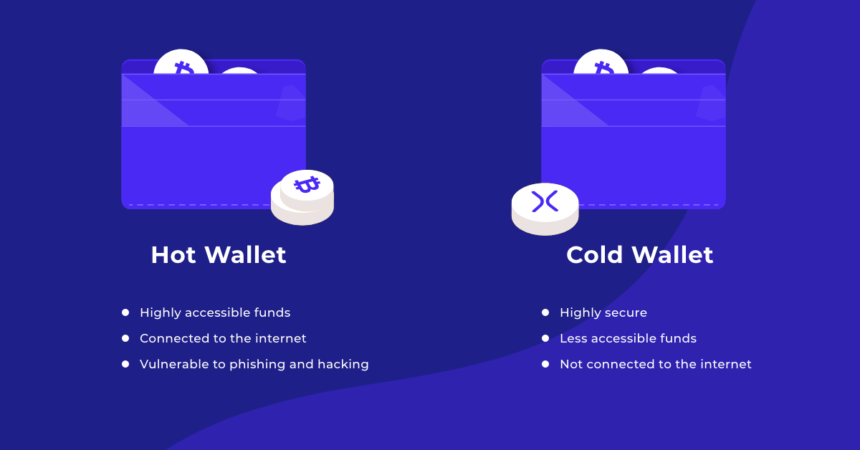
The most important distinction for users is often between a hot wallet and a cold wallet. A hot wallet is connected to the internet and is generally convenient for frequent transactions, decentralized applications, token swaps and Web3 activity. A cold wallet is designed to keep the credentials needed to control crypto offline, which can significantly reduce exposure to online attacks but introduces different risks, including loss or physical damage.
The U.S. Securities and Exchange Commission’s Investor.gov explains that crypto wallets store private keys or passcodes rather than the crypto assets themselves. It also defines hot wallets as wallets connected to the internet and cold wallets as wallets generally not connected to the internet.
Choosing between hot and cold storage is therefore not simply a question of which wallet is “better.” The right choice depends on how frequently you transact, how much cryptocurrency you hold, your security knowledge, your tolerance for inconvenience, and whether you prefer self-custody or third-party custody.
This guide explains how crypto wallets work, the difference between hot wallets and cold wallets, private keys and seed phrases, security risks, hardware wallets, self-custody, custodial wallets, wallet types, common mistakes, and practical ways to choose a crypto storage strategy.
What Is a Crypto Wallet?
A crypto wallet is software, hardware or another system that allows you to interact with blockchain assets and control the credentials required to authorize transactions.
Unlike a traditional physical wallet, it does not contain physical coins. Your cryptocurrency exists as records on a blockchain. The wallet manages the cryptographic information that allows you to prove control over the relevant blockchain address and sign transactions.
Ethereum’s official documentation describes wallets as tools that allow users to interact with their Ethereum accounts, view balances, send transactions and connect to applications. It also notes that wallet providers generally do not hold the funds themselves when users are using self-custody wallets; instead, the wallet provides an interface for interacting with assets on the blockchain.
This distinction is fundamental.
If someone loses a phone containing a crypto wallet application, the cryptocurrency itself has not disappeared from the blockchain. The critical question is whether the person still has the private key or recovery information needed to regain control.
Conversely, if someone obtains the private key or seed phrase, they may be able to transfer the assets associated with it.
Investor.gov explains that a private key authorizes transactions and that losing the private key can permanently prevent access to crypto assets.
How Does a Crypto Wallet Work?
A crypto wallet generally works through a combination of cryptographic keys.
The public-facing component can be used to receive assets. The private key is used to authorize transactions.
An easy analogy is an email address and password, although the cryptographic system behind a blockchain wallet is considerably more sophisticated.
Your wallet address can generally be shared when someone needs to send you cryptocurrency. Your private key should never be shared.
Ethereum’s security guidance is particularly direct about recovery phrases: anyone who obtains a wallet’s recovery phrase can potentially access the accounts controlled by it and move the assets. Ethereum also warns that legitimate services, support agents and websites should not ask users for their seed phrases or private keys.
This creates an important security principle:
Your wallet address may be public. Your private key and recovery phrase must remain private.
What Is a Private Key?
A private key is a cryptographic credential used to authorize transactions from a blockchain account.
It is not the same as your wallet password, although both may play a role in accessing a particular wallet application.
The private key is especially important because control of the private key generally means control over the ability to authorize transactions for the associated assets.
Investor.gov explains that a private key is a randomly generated alphanumeric passcode that allows transactions to be authorized and warns that losing it can result in permanent loss of access.
There is usually no central “forgot password” function equivalent to what you might have with a conventional online account when you are using true self-custody.
That is one of cryptocurrency’s defining characteristics and one of its biggest responsibilities.
What Is a Seed Phrase?
A seed phrase, also called a recovery phrase or secret recovery phrase, is a sequence of words generated by many cryptocurrency wallets.
It can be used to restore a wallet and its accounts if the original device or wallet software becomes unavailable.
For example, if your hardware wallet is destroyed, you may be able to purchase another compatible device and restore access using the correct recovery phrase.
However, the same property that makes a seed phrase useful also makes it extremely sensitive.
Anyone who obtains the phrase may potentially gain access to the wallet.
Ethereum’s official security guidance states that the recovery phrase is effectively the master key to the wallet and warns users not to share it. It also recommends avoiding screenshots because cloud synchronization could expose the phrase.
A recovery phrase should therefore never be treated like an ordinary password.
What Is a Hot Wallet?
A hot wallet is a cryptocurrency wallet that is connected to the internet.
Hot wallets commonly include:
- mobile wallet applications
- browser wallets
- desktop wallet software
- Web3 wallets connected to decentralized applications
The main advantage is convenience.
If you frequently trade, swap tokens, interact with DeFi applications, mint digital assets, use blockchain games or make regular cryptocurrency payments, a hot wallet can provide quick access.
The trade-off is greater exposure to online threats.
Investor.gov states that hot wallets provide convenient access for transactions but expose crypto assets to cyberthreats because they are connected to the internet.
That does not mean every hot wallet is inherently unsafe. Security depends on the software, device, operating system, user behavior, transaction approvals and broader security practices.
However, internet connectivity creates an additional attack surface.
What Is a Cold Wallet?
A cold wallet is generally designed to keep the credentials controlling cryptocurrency offline.
Hardware wallets are the most recognizable form of cold wallet for individual users.
A hardware wallet is a physical device designed to keep private keys isolated from ordinary internet-connected computing environments. When a transaction is initiated, the device can be used to sign it without exposing the private key directly to the connected computer.
Ethereum’s security guidance describes hardware wallets as offline storage for private keys and notes that keeping private keys offline can significantly reduce the risk of remote compromise.
Investor.gov similarly explains that cold wallets are typically not connected to the internet and are generally less exposed to cyberthreats than hot wallets, while warning that physical devices can be lost, damaged or stolen.
Cold storage therefore changes the risk profile rather than eliminating risk.
Instead of primarily worrying about online compromise, the user must also think about physical security, recovery procedures, device authenticity and backup management.
Hot Wallet vs Cold Wallet: Key Differences
The simplest comparison is convenience versus isolation.
| Feature | Hot Wallet | Cold Wallet |
| Internet connection | Generally connected | Generally offline |
| Convenience | High | Lower |
| Frequent transactions | Well suited | Less convenient |
| Online attack exposure | Higher | Generally lower |
| Physical loss risk | Lower for software itself | Higher |
| Typical use | Trading, payments, Web3 | Long-term storage |
| Setup complexity | Usually easier | Can require more care |
| Private-key control | Can be self-custodial or custodial | Commonly self-custodial |
| Main security concern | Online attacks and malicious approvals | Loss, theft, recovery phrase compromise |
There is no universal rule that every investor should use only one type.
Many experienced users use a combination.
A smaller amount intended for regular transactions can remain in a hot wallet, while larger long-term holdings may be kept using a carefully managed cold-storage setup.
The key is to match the storage method to the purpose of the funds.
Hot Wallet vs Cold Wallet: Which Is Safer?
For protecting private keys from remote internet attacks, cold storage generally has an important security advantage because the signing credentials can remain offline.
But saying “cold wallets are safe” without qualification would be misleading.
A cold wallet can still be compromised through a stolen recovery phrase, malicious setup instructions, fake devices, physical theft, social engineering, or a user approving a transaction they do not understand.
Similarly, a hot wallet is not automatically dangerous. A carefully configured hot wallet with strong device security, limited funds and cautious transaction practices can be useful for everyday blockchain activity.
The more accurate conclusion is:
Cold wallets generally reduce online attack exposure, while hot wallets generally provide greater convenience. Neither eliminates user error or all forms of cryptocurrency risk.
Why Crypto Wallet Security Matters More Than Ever
The security risks surrounding cryptocurrency wallets are not theoretical.
Chainalysis reported that more than $3.4 billion in cryptocurrency was stolen during 2025 through theft-related activity, with the February 2025 Bybit compromise alone accounting for approximately $1.5 billion.
Chainalysis also estimated that personal wallet compromises reached approximately 158,000 incidents in 2025, involving at least 80,000 unique victims. The company estimated $713 million in value stolen from individual victims during the year.
Earlier Chainalysis research found that private-key compromises accounted for 43.8% of stolen cryptocurrency in 2024.
These statistics demonstrate why wallet security deserves more attention than simply selecting an application with a good interface.
The weakest point may not be the blockchain itself. It may be the user’s device, recovery phrase, browser extension, transaction approval, social-engineering exposure or custody arrangement.
What Is Self-Custody in Crypto?
Self-custody means you control the private keys associated with your cryptocurrency rather than relying on an exchange or another third-party custodian to control them.
The phrase “not your keys, not your coins” is often used within the crypto community to describe this concept.
Self-custody can provide greater control because you do not have to rely entirely on an exchange’s ability to process withdrawals or remain operational.
However, control comes with responsibility.
Investor.gov explains that with self-custody, the user has sole responsibility for securing private keys and recovery phrases. If these credentials are lost, stolen or compromised, the user may permanently lose access to the assets.
This is the fundamental trade-off:
More control can mean more responsibility.
What Is Custodial Crypto Storage?
With custodial storage, a third party controls the private keys on your behalf.
Centralized cryptocurrency exchanges are common examples.
The user logs into an account and sees a balance, but the underlying private keys may be controlled by the platform rather than by the individual customer.
This can be convenient because the provider may offer password recovery, account security tools, customer support and transaction interfaces.
However, it introduces counterparty risk.
Investor.gov warns that if a third-party custodian is hacked, shuts down or becomes bankrupt, users may lose access to crypto assets.
This means “where is my crypto stored?” is actually a more complicated question than many beginners realize.
You should ask:
Who controls the private keys?
Can I withdraw directly to an external wallet?
What happens if the company stops operating?
Are assets held in hot wallets, cold wallets or both?
What protections exist if the custodian is hacked?
What fees apply to withdrawals?
These questions matter when evaluating a crypto exchange or custody provider.
Software Wallets vs Hardware Wallets
Software wallets and hardware wallets serve different purposes.
A software wallet is installed on a smartphone, computer or browser environment. It can provide fast access and is usually convenient for everyday blockchain interactions.
A hardware wallet is a physical device designed to isolate private-key operations from an internet-connected environment.
Software wallets are often more convenient for active users.
Hardware wallets can be more suitable for people holding substantial amounts for longer periods and who prioritize reducing online attack exposure.
However, the actual security of a hardware wallet depends on how it is purchased, initialized, backed up and used.
A hardware device does not protect you if you voluntarily enter your recovery phrase into a phishing website.
What Is a Mobile Crypto Wallet?
A mobile crypto wallet is a wallet application installed on a smartphone.
Its biggest advantage is accessibility.
You can use a mobile wallet to send and receive crypto, connect to supported applications and manage assets while traveling.
The downside is that smartphones are connected devices. Malware, phishing, malicious applications, compromised backups and social engineering can create security risks.
A mobile wallet is therefore often more appropriate for operational funds rather than storing every cryptocurrency asset you own.
The amount you keep in a mobile wallet should reflect the level of risk you are prepared to accept.
What Is a Browser Wallet?
A browser wallet operates through a web browser, commonly through an extension.
Browser wallets are particularly important in Web3 because decentralized applications can request wallet connections and transaction signatures.
This makes them highly convenient for decentralized exchanges, NFT marketplaces, DeFi applications and blockchain-based services.
It also creates a major security responsibility: users need to understand what they are signing.
A malicious or compromised website may attempt to trick a user into approving a transaction that transfers assets or grants token permissions.
The security problem is therefore not always “someone stole my seed phrase.”
Sometimes the user still has the private key but unknowingly authorizes a harmful blockchain transaction.
What Is a Hardware Wallet?
A hardware wallet is a physical device that stores or protects private keys in an isolated environment.
The goal is to reduce the possibility that malware running on an ordinary computer can directly obtain the private key.
Ethereum’s official security documentation specifically recommends hardware wallets for keeping private keys offline and states that a hardware wallet’s private key does not touch the internet.
However, hardware-wallet users still need to protect their recovery phrases.
If the device is lost but the recovery phrase is safely preserved, recovery may be possible.
If the recovery phrase is stolen, the physical hardware device itself may no longer provide meaningful protection.
This is why recovery-phrase security can be more important than the physical appearance or brand of the wallet.
What Is a Paper Wallet?
A paper wallet is a physical representation of wallet credentials, traditionally involving printed private keys or recovery information.
Although paper storage can keep credentials offline, it introduces significant physical risks.
Paper can be destroyed by fire, water or deterioration. It can also be photographed, copied or stolen.
Modern hardware-wallet and secure backup approaches are generally easier for many users to manage safely than relying on a simple piece of paper.
Investor.gov includes paper among examples of cold-wallet storage but also emphasizes the physical-loss risk associated with offline storage.
The Biggest Crypto Wallet Security Mistakes
Many cryptocurrency losses result from avoidable mistakes rather than sophisticated blockchain attacks.
One of the most dangerous is sharing a seed phrase.
No legitimate wallet support representative should need your recovery phrase to “fix” your account.
Another common mistake is storing a recovery phrase in an ordinary cloud document, email account or screenshot.
Ethereum warns specifically against taking screenshots of seed phrases because cloud synchronization can make them accessible to attackers.
Phishing is another major threat.
A fake wallet website can look almost identical to the legitimate service and ask users to enter their recovery phrase.
Fake customer-support accounts can also contact users through social media or messaging platforms.
Investor.gov advises investors to watch for crypto phishing scams, protect private keys and recovery phrases, and use strong passwords and multi-factor authentication for relevant online accounts.
A useful rule is simple:
Anyone asking for your seed phrase is asking for the information that can potentially control your wallet.
How to Protect a Crypto Wallet
Good wallet security is less about finding one perfect product and more about reducing multiple points of failure.
Start by purchasing hardware wallets only through trustworthy channels and verify the device according to the manufacturer’s security instructions.
Never share your seed phrase.
Do not store your seed phrase in a screenshot, email, messaging application or ordinary cloud storage.
Keep backups physically secure and protected from unauthorized access.
Use a strong device password and appropriate multi-factor authentication where available.
Keep your operating system, wallet software and security tools updated.
When interacting with decentralized applications, verify the website domain before connecting your wallet.
Do not blindly approve transactions.
Keep only the amount needed for routine activity in a hot wallet.
For larger long-term holdings, consider whether a properly managed cold-storage strategy better fits your risk profile.
The objective is not to eliminate every possible risk. It is to make a catastrophic compromise significantly harder.
What Is Wallet Address Whitelisting?
Some exchanges and custodial services allow users to create withdrawal address allowlists or whitelists.
This can add a layer of protection by restricting withdrawals to pre-approved addresses.
For example, if an attacker gains access to an exchange account, an address-whitelisting feature may make it more difficult to immediately withdraw funds to an unfamiliar address.
However, this is an account-level security feature rather than a replacement for self-custody or private-key protection.
Users should review the exact implementation and withdrawal rules of the provider they use.
How Much Crypto Should You Keep in a Hot Wallet?
There is no universal dollar amount that is appropriate for everyone.
A useful principle is to treat a hot wallet as an operational account.
If you use it for daily transactions, decentralized applications or token swaps, keep only the amount you reasonably need for those activities.
Long-term holdings that do not need frequent access can potentially be separated into a more secure storage arrangement.
For example, someone holding $1,000 in cryptocurrency for occasional purchases has a very different security requirement from someone holding $100,000 intended for long-term investment.
The higher the potential loss, the more serious storage architecture should be treated.
Should You Use Both a Hot Wallet and a Cold Wallet?
For many cryptocurrency users, using both can be a practical approach.
A hot wallet can function as a spending or interaction wallet.
A cold wallet can function as long-term storage.
This is similar to separating money used for everyday expenses from savings.
Suppose someone owns cryptocurrency worth $20,000.
They might choose to keep a smaller operational balance in a hot wallet for decentralized applications and transactions while placing the majority of their long-term holdings under a carefully managed cold-storage strategy.
The exact allocation is a personal risk decision, not a universal recommendation.
The important concept is compartmentalization.
If a hot wallet is compromised, the attacker does not automatically gain access to assets stored under a separate wallet with independently protected keys.
Can a Cold Wallet Be Hacked?
A cold wallet can reduce online attack exposure, but no storage method should be described as completely immune to compromise.
The device itself could be stolen or damaged.
The recovery phrase could be photographed.
A user could purchase a counterfeit device.
A user could be tricked into entering the recovery phrase into a fake website.
A malicious transaction could be approved.
The device could also be improperly initialized or backed up.
Cold storage is therefore best understood as a security architecture rather than a magical security product.
Its major advantage is that the private key can remain isolated from internet-connected environments.
Hot Wallet vs Cold Wallet for Beginners
Beginners often benefit from understanding custody before choosing a wallet.
Start with a small amount rather than immediately transferring your entire cryptocurrency portfolio.
Learn how wallet addresses work.
Perform a small test transaction before sending a larger amount.
Understand network selection. Sending an asset through an incompatible network can create serious problems.
Learn the difference between a wallet address, private key, seed phrase and transaction signature.
Then decide whether you need frequent access or long-term storage.
If you are primarily experimenting with Web3, a hot wallet may provide the necessary convenience.
If you are primarily holding cryptocurrency for the long term, cold storage may be worth considering.
Crypto Wallet Security and the Future of Digital Asset Custody
As cryptocurrency adoption expands, wallet security is becoming increasingly important.
The number and sophistication of attacks also demonstrate why users cannot rely exclusively on platform security.
Chainalysis estimated that personal wallet compromises increased dramatically between 2022 and 2025, reaching approximately 158,000 incidents in 2025 compared with about 54,000 in 2022. Unique victims increased from approximately 40,000 to at least 80,000 during the same period.
At the same time, institutional custody is becoming more sophisticated, while hardware wallets, multisignature systems, smart-contract wallets and account-abstraction technologies continue to evolve.
The future of crypto custody is therefore unlikely to be limited to a simple hot-versus-cold distinction.
Users will increasingly choose among combinations of self-custody, hardware security, multisignature controls, smart wallets, institutional custody and other security architectures.
The basic principle, however, remains the same:
The more valuable the assets, the more carefully the access credentials should be protected.
Final Verdict: Hot Wallet or Cold Wallet?
The hot wallet versus cold wallet debate is ultimately about balancing accessibility and security.
Hot wallets are generally better suited to frequent transactions, Web applications, token swaps and smaller operational balances. Their internet connectivity makes them convenient, but also creates greater exposure to online threats.
Cold wallets are generally better suited to long-term storage and users who want to reduce exposure to internet-connected attacks. However, they introduce physical-security and recovery-management responsibilities.
Neither is universally superior.
For many users, a sensible strategy is to use a hot wallet for everyday blockchain activity and a properly secured cold wallet for larger long-term holdings.
The most important decision is not the brand printed on the wallet. It is understanding who controls the private keys, how recovery works, where the seed phrase is stored, what transactions you approve and what happens if your device or service becomes unavailable.
The scale of recent crypto theft reinforces the importance of this approach. Chainalysis reported more than $3.4 billion in cryptocurrency theft during 2025 and estimated 158,000 personal wallet compromise incidents during the year.
A crypto wallet should therefore be viewed as a security system for controlling blockchain assets, not simply as an app for viewing a balance.
The best wallet setup is the one that matches your transaction habits, asset value, technical ability and tolerance for both online and physical security risks.
Frequently Asked Questions About Crypto Wallets
What is a crypto wallet?
A crypto wallet is a software, hardware or other tool that allows users to access blockchain assets and authorize transactions. The wallet does not physically contain the cryptocurrency; it manages the cryptographic credentials needed to control assets associated with blockchain addresses.
What is the difference between a hot wallet and a cold wallet?
A hot wallet is generally connected to the internet, making it convenient for transactions and Web3 applications. A cold wallet is generally kept offline, reducing exposure to online attacks but creating additional physical-security and backup responsibilities.
Is a cold wallet safer than a hot wallet?
A cold wallet generally provides stronger protection against remote online attacks because the private keys can remain offline. However, it is not completely risk-free. Loss of the device, theft of the recovery phrase, physical damage and user mistakes can still result in loss of access.
Is a hot wallet safe?
A hot wallet can be used safely when appropriate security practices are followed, but its internet connectivity creates additional cyber-security exposure. Users should keep operational balances limited, protect their devices and carefully verify transactions and websites.
What is a private key in cryptocurrency?
A private key is a cryptographic credential used to authorize blockchain transactions. Whoever controls the private key can generally control the assets associated with the relevant blockchain account. Investor.gov warns that losing a private key can result in permanent loss of access.
What is a seed phrase?
A seed phrase is a sequence of words generated by many crypto wallets that can be used to restore wallet access. It is extremely sensitive because someone who obtains it may be able to access the associated accounts and assets.
Should I keep all my crypto in a cold wallet?
Not necessarily. Your ideal storage arrangement depends on how you use cryptocurrency. A cold wallet can be useful for long-term holdings, while a hot wallet can be more convenient for everyday transactions and Web3 activity. Some users therefore use both.
Can someone steal crypto without my seed phrase?
Yes. Cryptocurrency can potentially be lost through malicious transaction approvals, compromised devices, phishing, exchange breaches, stolen private keys, social engineering and other attack methods. Protecting the seed phrase is critical but is not the only security responsibility.
Can a hardware wallet be hacked?
Hardware wallets are designed to reduce exposure to online attacks, but they do not eliminate every risk. Attackers may target users through phishing, malicious transactions, fake websites or stolen recovery phrases. Ethereum recommends hardware wallets as a way to keep private keys offline.
What happens if I lose my hardware wallet?
If your recovery phrase has been securely backed up, you may be able to restore the wallet using another compatible device. If both the device and the recovery information are lost, access to the assets may be permanently lost.
Is it safe to store a seed phrase in Google Drive or email?
It is generally a poor security practice to store an unencrypted recovery phrase in ordinary cloud storage or email. Ethereum specifically warns against screenshots of seed phrases because they may synchronize to cloud services and become accessible to attackers.
Can I use a crypto wallet without an exchange?
Yes. Self-custody wallets allow users to control their own private keys and interact directly with blockchain networks. However, buying cryptocurrency with traditional currency and converting crypto back to fiat may still require an exchange or another service depending on the user’s location and circumstances.
What is self-custody in crypto?
Self-custody means the user controls the private keys rather than a third-party custodian. It provides greater direct control but also places responsibility for security, backups and recovery entirely on the user.
What is a custodial crypto wallet?
A custodial arrangement means a third party controls the private keys on behalf of the user. Cryptocurrency exchanges commonly provide custodial services. This can be convenient but introduces counterparty and platform risks.
Are crypto wallets anonymous?
Not necessarily. Blockchain addresses can often be viewed publicly, and transactions may be traceable on public blockchains. A wallet address is generally pseudonymous rather than automatically anonymous.
What is the best crypto wallet?
There is no single best crypto wallet for everyone. The appropriate choice depends on the cryptocurrency being stored, transaction frequency, custody preference, security requirements, technical knowledge and amount at risk. A wallet should be evaluated based on its actual security model rather than marketing claims.
How much crypto should I keep in a hot wallet?
There is no universal amount. A common risk-management principle is to keep only the amount needed for regular transactions or Web3 activity in an internet-connected wallet and consider more secure long-term storage for assets that do not require frequent access.
Why is crypto wallet security important?
Because control of wallet credentials can determine control of blockchain assets. Recent Chainalysis data illustrates the scale of the threat: more than $3.4 billion in cryptocurrency was stolen in 2025, while personal wallet compromises reached an estimated 158,000 incidents.
What is the biggest mistake crypto wallet users make?
One of the most serious mistakes is exposing the seed phrase or private key. Other major errors include trusting fake support agents, clicking phishing links, approving unknown transactions, using unverified software and failing to maintain secure backups.
Can I have multiple crypto wallets?
Yes. Users can maintain multiple wallets for different purposes. For example, one wallet can be used for everyday transactions, another for interacting with decentralized applications and another for long-term cold storage.
Is a crypto wallet the same as a bank account?
No. A crypto wallet interacts with blockchain networks and uses cryptographic credentials to authorize transactions. A bank account is maintained within a centralized financial institution and is governed by a different legal and operational framework.
If you want to contribute your piece of content on Crypto, Bitcoins and other digital currencies for Bitsoz, You can search for us in Google with queries like “write for us crypto”. “Write for us bitcoins” or directly contact us and let us know what you want.