

Introduction
Bitcoin mining is one of the most misunderstood parts of the Bitcoin ecosystem. Many people hear the word “mining” and imagine computers randomly creating money. In reality, mining is a carefully designed process that keeps Bitcoin secure, decentralized, and trustworthy.
- Introduction
- What Is Bitcoin Mining?
- The Role of Bitcoin Mining in the Network
- How Bitcoin Mining Works (Step-by-Step)
- Proof of Work Explained Simply
- Bitcoin Miners and Mining Hardware
- Bitcoin Mining Rewards and Incentives
- Bitcoin Halving and Mining Economics
- Energy Use and Bitcoin Mining
- Is Bitcoin Mining Centralized or Decentralized?
- Bitcoin Mining Security and Network Protection
- Why Bitcoin Mining Matters Globally
- Common Myths About Bitcoin Mining
- The Future of Bitcoin Mining
- Conclusion
- Frequently Asked Questions:
To truly understand how Bitcoin mining works and why it matters, you need to look beyond price charts and headlines. Mining is the engine that powers the Bitcoin network. Without it, Bitcoin simply would not function.
What Is Bitcoin Mining?
Bitcoin mining is the process of validating transactions and adding them to the Bitcoin blockchain. It is also the mechanism through which new Bitcoin enters circulation.
Unlike traditional currencies, where money is created by central banks, Bitcoin relies on distributed miners around the world. These miners compete to solve complex cryptographic problems, and the first to solve one earns the right to add a new block to the blockchain.
This system removes the need for trust in a central authority and replaces it with math and code.
The Role of Bitcoin Mining in the Network
Bitcoin mining serves three critical purposes:
- Transaction verification
- Network security
- Decentralization
Every Bitcoin transaction must be verified to ensure the sender actually owns the Bitcoin being spent. Miners perform this verification collectively, preventing fraud and double spending.
By spreading this responsibility across thousands of participants, Bitcoin avoids single points of failure and centralized control.
How Bitcoin Mining Works (Step-by-Step)
Understanding how Bitcoin mining works becomes much easier when broken down into steps.
First, Bitcoin transactions are broadcast to the network. These transactions are unconfirmed and sit in a pool waiting to be processed.
Miners collect these transactions and bundle them into a candidate block. Each block contains:
- Transaction data
- A timestamp
- A reference to the previous block
Next comes hashing. Miners must find a cryptographic hash that meets strict network requirements. This involves repeatedly guessing numbers until the correct hash is found.
Once a miner finds a valid hash, the block is broadcast to the network. Other nodes verify it, and if valid, it is added permanently to the blockchain.
This entire process typically takes around 10 minutes.
Proof of Work Explained Simply
Bitcoin mining is built on a system called Proof of Work.
Proof of Work requires miners to prove they have expended computational effort before adding a block. This effort makes attacks extremely expensive and impractical.
The beauty of Proof of Work lies in its simplicity. While finding a valid hash is difficult, verifying it is easy. This ensures efficiency and security across the network.
Proof of Work is the reason Bitcoin remains one of the most secure digital networks ever created.
Bitcoin Miners and Mining Hardware
In Bitcoin’s early days, mining could be done using basic computers. As the network grew, mining became more competitive.
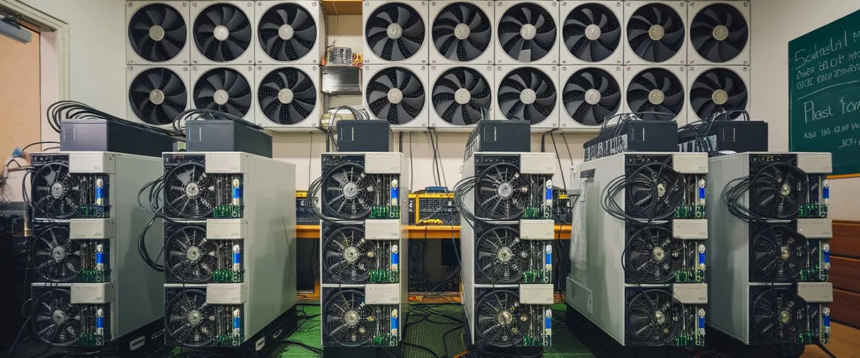
Today, miners use specialized machines known as ASIC miners (Application-Specific Integrated Circuits). These devices are designed solely for Bitcoin mining and are far more efficient than CPUs or GPUs.
The network automatically adjusts mining difficulty to ensure blocks are produced at a consistent rate, regardless of how much computing power is added.
Bitcoin Mining Rewards and Incentives
Miners are incentivized to participate through rewards.
Each time a miner successfully adds a block, they receive:
- A block reward (newly created Bitcoin)
- Transaction fees from included transactions
This incentive structure ensures miners act honestly. Attempting to cheat the system would cost far more than any potential gain.
Over time, block rewards decrease, making transaction fees increasingly important for miner compensation.
Bitcoin Halving and Mining Economics
Bitcoin has a fixed supply of 21 million coins. To control this supply, Bitcoin undergoes a process called Bitcoin halving approximately every four years.
During a halving event, the block reward is cut in half. This slows the rate at which new Bitcoin enters circulation and reinforces digital scarcity.
Halving events play a major role in mining economics, forcing miners to become more efficient while strengthening Bitcoin’s long-term value proposition.
Energy Use and Bitcoin Mining
Bitcoin mining consumes energy, and this has sparked global debate. However, energy use is not inherently negative.
Bitcoin converts energy into network security. The energy cost makes attacks prohibitively expensive and protects the integrity of the blockchain.
Increasingly, miners are turning to renewable energy sources such as hydro, solar, and wind. Many mining operations also utilize excess or wasted energy that would otherwise go unused.
Is Bitcoin Mining Centralized or Decentralized?
Mining is often criticized for becoming centralized, especially through mining pools. Pools allow miners to combine resources and earn more consistent rewards.
While pools do introduce coordination, control remains distributed. Miners can switch pools at any time, and no single entity controls the majority of the network.
Bitcoin’s open and competitive mining environment helps maintain decentralization despite growing scale.
Bitcoin Mining Security and Network Protection
Bitcoin mining protects the network against attacks, including the often-discussed 51% attack.
To control the network, an attacker would need to acquire most of the global mining power. The cost of such an attack would be enormous and economically irrational.
This security model is one of the strongest arguments for Bitcoin’s long-term resilience.
Why Bitcoin Mining Matters Globally
Bitcoin mining matters because it supports a permissionless financial system.
Mining ensures Bitcoin remains:
- Censorship resistant
- Globally accessible
- Independent of governments and banks
In regions with unstable financial systems, Bitcoin provides an alternative that cannot be manipulated or shut down easily.
Mining is what allows Bitcoin to function as neutral, borderless money.
Common Myths About Bitcoin Mining
One common myth is that mining creates Bitcoin instantly. In reality, mining follows strict rules and timelines.
Another myth is that mining has no real purpose. In truth, mining is what prevents fraud and ensures trust without intermediaries.
Some believe Bitcoin mining is illegal everywhere, but regulations vary widely across countries.
The Future of Bitcoin Mining
Bitcoin mining continues to evolve. Advances in hardware efficiency, energy sourcing, and infrastructure are shaping its future.
As block rewards decrease, mining will increasingly rely on transaction fees. This transition is built into Bitcoin’s design and supports long-term sustainability.
Rather than disappearing, mining is becoming more optimized and environmentally conscious.
Conclusion
Understanding how Bitcoin mining works and why it matters reveals why Bitcoin is more than just digital currency. Mining is the foundation that keeps the system secure, decentralized, and trustworthy.
Without mining, Bitcoin would lose its integrity. With it, Bitcoin continues to operate as a global, open financial network powered by mathematics rather than trust.
Frequently Asked Questions:
How does Bitcoin mining work?
Bitcoin mining works by validating transactions and adding them to the blockchain. Miners use computational power to solve cryptographic puzzles, and the first miner to solve one adds a new block to the network.
Why is Bitcoin mining important?
Bitcoin mining is important because it secures the network, prevents double spending, and keeps Bitcoin decentralized. Without mining, the Bitcoin system would not function reliably.
What is Proof of Work in Bitcoin mining?
Proof of Work is a consensus mechanism that requires miners to expend computational effort to validate transactions. It makes the Bitcoin network secure and resistant to attacks.
Do Bitcoin miners create new Bitcoin?
Yes, miners receive newly created Bitcoin as a block reward for successfully adding a block to the blockchain. This is the only way new Bitcoin enters circulation.
How long does it take to mine one Bitcoin?
There is no fixed time to mine one Bitcoin. The network produces a new block roughly every 10 minutes, and mining rewards are distributed among miners based on their contributed computing power.
Is Bitcoin mining legal?
Bitcoin mining legality depends on local regulations. In many countries it is legal, while some regions restrict or regulate mining due to energy usage or policy concerns.
Why does Bitcoin mining use so much energy?
Bitcoin mining uses energy because computational work is required to secure the network. This energy consumption helps protect Bitcoin from fraud and malicious attacks.
Can Bitcoin mining be environmentally friendly?
Yes, many mining operations use renewable energy sources such as hydro, wind, and solar power. Some miners also use excess or wasted energy that would otherwise go unused.
What happens when all Bitcoin is mined?
When the maximum supply of 21 million Bitcoin is reached, miners will no longer receive block rewards. They will earn income through transaction fees for validating transactions.
Is Bitcoin mining becoming centralized?
While mining pools exist, Bitcoin mining remains decentralized. Miners can freely join or leave pools, and no single entity controls the entire network.